What Is Vegan Leather? Types, Downsides and How to Care for It

Vegan leather bags are everywhere now — lighter on the wallet and free of animal hides. But it is a half-forgiving material: it looks like leather, yet it ages and needs care in a completely different way. This guide explains what it is actually made of, the common types, and how to keep a vegan leather bag going for years.

What is vegan leather?
Vegan leather is an umbrella term for leather alternatives with a surface finished to imitate animal hide. In practice it falls into two groups:
- Synthetic polymer leather: the most common are PU (polyurethane) and PVC (polyvinyl chloride). A fabric base is coated with the polymer, then embossed with a leather grain.
- Plant-based materials: made from pineapple fibers, cactus, apple waste, mushroom mycelium and similar inputs, usually blended with some polymer. They are growing fast but still a small share of the market and often cost more than PU.
Common types and how to choose
PU dominates the market: soft, light, close to leather in feel, and far cheaper than the real thing. Its weak point is the polymer coating, which thins with use — after a few years it can crack or peel.
PVC is cheaper and holds shape well, but it is stiff, barely breathable, and hard to break down environmentally. If you are choosing between the two, go with PU; very cheap bags are usually PVC, so do not expect a long life from them.
Plant-based leather reduces the polymer load but still has a coating layer. Do not expect it to behave exactly like real leather — durability still depends mostly on that top coat.
How vegan leather differs from real leather
- How it ages: real leather develops its own patina and creases; vegan leather's coating wears thin, then cracks and peels in small patches — especially at the flap fold, handles and corners.
- Scratches: scuffs on real leather can often be blended out by a restorer; deep scratches on vegan leather usually cut through the coating and are hard to repair fully.
- Water: PU barely absorbs water on the surface, unlike suede, but the stitching and fabric base still do — left wet, it stains and warps.
- Conditioning: leather conditioners do not soak into polymer. Extra product just leaves a greasy film that attracts dust.
Caring for a vegan leather bag
- Wipe dust weekly with a soft, damp cloth, well wrung out.
- For localized stains: dilute a little neutral soap in water, apply with a cloth, dab gently, then wipe again with a clean damp cloth.
- Dry the bag right away after rain; stuff it with clean paper to hold shape and let it air dry in a ventilated spot.
- Store it in a breathable dust bag, in a cool dry place, without stacking weight on top. Sunlight and heat make the coating brittle faster.
- If you use a cleaner, pick one labeled safe for synthetic leather — never test with strong solvents.
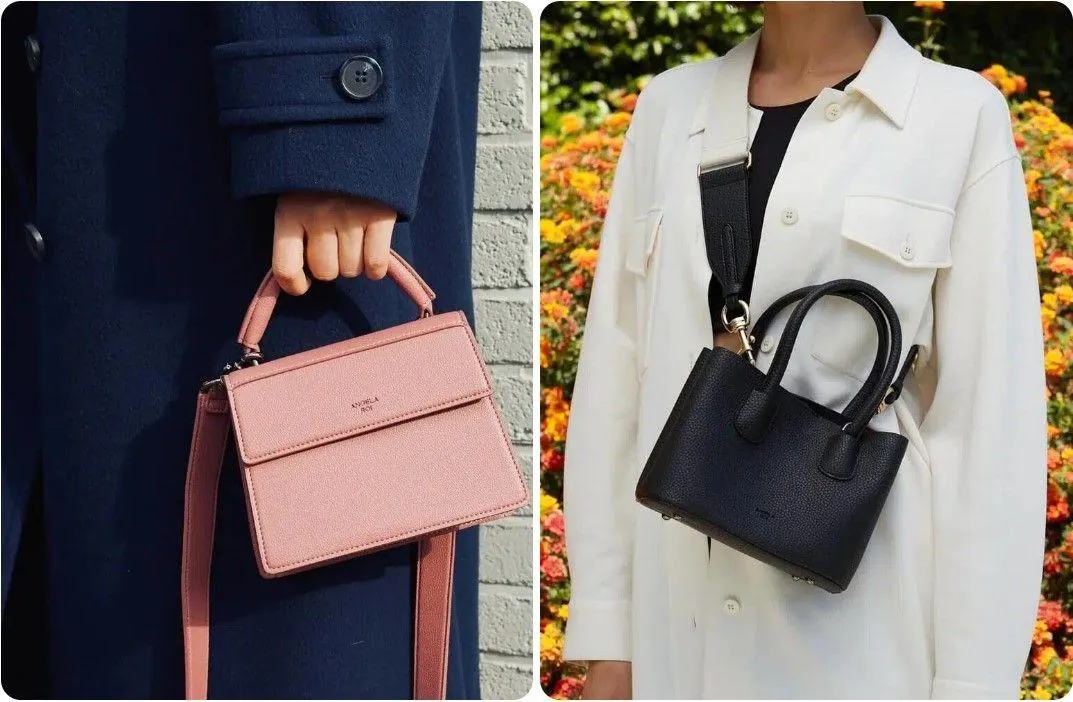
What to avoid
- Acetone, nail polish remover, bleach, strong alcohol: they dissolve or discolor the coating.
- Heat guns, direct sunlight, hair dryers: heat makes the coating brittle and crack sooner.
- Machine washing or soaking the whole bag: the fabric base absorbs water, stains spread and seams puff up.
- Real-leather conditioner on polymer surfaces: it is not absorbed and leaves a sticky film.
Early signs of wear
- Fine cracking at the folds — caught early, the bag can still be cleaned and the surface refinished to extend its life.
- Peeling patches exposing the fabric base: glue will not fix this; it needs surface refinishing, and a badly degraded base is rarely recoverable.
- Tacky, sticky handles: usually heat or solvent damage — keep the bag away from car dashboards and stovetops.
- Mold or musty smell: treat it the safe way, as described in our guide to moldy leather bags, instead of wiping with harsh chemicals.
Severe peeling on vegan leather rarely comes back looking new — the realistic goal is a clean bag, a refinished surface, and stopping the spread.
When should you send your bag to EXTRIM?
If a bag is heavily soiled, moldy, smelly, has sticky handles, or the coating has started to crack, DIY attempts tend to make things worse. EXTRIM's luxury bag spa cleans by material, treats mold and odor, and refinishes the surface when it is not too late; color restoration is quoted after we assess the bag. Reference cleaning rates by the longest side of the body: from 300,000 VND (mini) up to 600,000 VND (large), spa care from 500,000 to 800,000 VND (2026 reference). See the full breakdown in our bag spa price guide; everyday habits are covered in how to care and store leather bags.
👉 Send photos of your bag for a condition assessment
Public cases
Photos in this article illustrate the process — they are not a before–after record with a public case code. EXTRIM does not use illustrative images to promise results for every pair.
Need Professional Attention for Your Item?
EXTRIM provides two-way doorstep courier pickup across Ho Chi Minh City, with up to 80,000 VND off qualifying orders. Service options, final pricing, timing, and any applicable repair warranty are confirmed for each item.