Prevent and Remove Mold on Leather Shoes
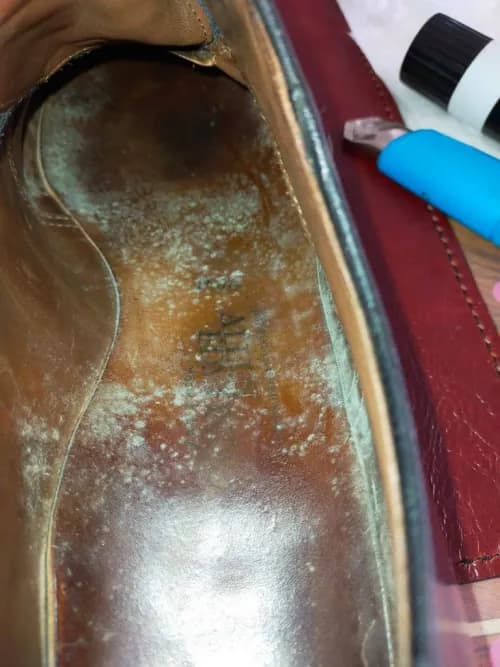
Mold on leather shoes is extremely common in humid climates like Ho Chi Minh City: sometimes just a few white specks, sometimes a full layer across the lining after a few weeks in a closed cabinet. This guide explains why mold forms, how to store shoes so it never returns, and how to remove it safely once it shows up.
Why does mold grow on leather?
Mold needs three things: high humidity, stagnant air and darkness — plus a layer of dust or organic grime to feed on. Tanned leather still contains natural oils and waxes, which are enough for mold to thrive if shoes get stored while even slightly damp. A sealed shoe cabinet, a shoebox kept in a damp spot, or rain-soaked shoes boxed up right away are the three most common setups.
Prevention starts with drying
- After rain or a sweaty day, wipe off dirt with a damp cloth and let the shoes dry in a ventilated spot. No hair dryers or direct heat — heat shrinks and cracks leather.
- Do not insert shoe trees right away when shoes are soaked; stuff them with white paper to absorb moisture, replace the paper as it gets wet, and only use wooden trees once the shoes are mostly dry.
- Tilt the shoes on an open surface or hang them so air circulates around the sole — the sole is where mold attacks first.
- Rotate your pairs and give each one a full drying window between wears.
Prevention: how you store them
- A sealed shoe cabinet is the enemy: leave the door ajar, drill a few vent holes in the back panel, or use a ribbed mat so air can move under the shoes.
- Original shoeboxes are dark, unventilated spaces — punch ventilation holes if you must use them, and only box up shoes that are completely dry.
- Add silica gel packs or cedar wood shavings to the box; during peak humidity season, wooden shoe trees plus a moisture absorber cover most situations. In a very damp home, a dehumidifier makes the clearest difference.
- Reapply waterproofing spray on schedule so water never soaks in — one of the root causes of mold.
Removing mold step by step
Step 1: take the shoes to a ventilated area — do not wipe mold down in a closed room, since spores can spread to other belongings.
Step 2: wipe the surface layer of mold with a clean cloth dipped in warm water and wrung out. Wipe the whole surface, not just the moldy patch, so drying does not leave a boundary line.
Step 3: wipe thoroughly with diluted white vinegar (about 10–12% vinegar; dilute further if it feels strong) using a cloth or sponge, including the inside if it shows signs of mold. Wear gloves. If the smell bothers you, use a dedicated leather cleaner instead.
Step 4: let the shoes air dry in a ventilated spot. Check again — if any mold remains, do another vinegar pass.
Step 5: once fully dry and mold-free, the leather will feel tight and dry — recondition it with a leather lotion, then apply cream polish and wax if the shoes have a polished finish.
When to hand them to EXTRIM
Mold that has reached the inner lining, mold that keeps returning despite repeated cleaning, or dark stains left behind after mold are all signs to stop treating it yourself — more scrubbing only fades the color and damages the finish. EXTRIM's shoe cleaning and spa service treats mold and yellowing with 2026 reference pricing from 150,000–300,000 VND depending on condition. See also why old moldy shoes keep smelling and how to treat a moldy leather bag safely.
Final pricing is confirmed after we see the actual condition of your shoes.
👉 Send photos of your moldy shoes for advice
Public case studies
Photos in this article illustrate the process — they are not a before–after record with a public case code. EXTRIM does not use illustrative images to promise results for every pair.
Need Professional Attention for Your Item?
EXTRIM provides two-way doorstep courier pickup across Ho Chi Minh City, with up to 80,000 VND off qualifying orders. Service options, final pricing, timing, and any applicable repair warranty are confirmed for each item.