Moldy Shoes Still Smell After Cleaning: Why the Odor Comes Back and How to Fix It
If the smell lingers after you've wiped the surface, the cause usually isn't in what you can see. The lining, insoles, toe box, or sole seams may still be damp and holding the odor. A returning smell doesn't automatically mean the shoes are beyond saving — but spraying perfume or wiping again and again will never fix a moisture source.
Why does the smell come back?
A pair of shoes can hold odor because:
- The lining and insoles never fully dried after rain or long wear.
- Sweat and grime have soaked into the porous materials.
- Surface mold was wiped away, but the interior was never checked.
- The shoes were boxed or put in a closed wardrobe while still damp.
Don't assume mold develops on the same timeline for every pair. Temperature, humidity, materials, and storage all affect how fast things deteriorate.
Treating mild odor at home
- Remove the insoles and laces, and air each part separately in a breezy spot.
- Dry-brush the dirt off the body and soles.
- Stuff lightly with clean paper to draw out moisture and hold the shape; replace the paper as it gets damp.
- Let the shoes dry completely before storing — no direct heat.
- Recheck once dry. If the smell returns after a single wear, the lining and cushioning need attention — not just the upper.
Baking soda or moisture absorber packs can help reduce dampness in mild cases, but they're no substitute for cleaning the lining and treating mold that's taken hold. Never spray vinegar, alcohol, or bleach onto suede, nubuck, or coated surfaces without checking compatibility first.
When should you stop treating it yourself?
Send photos or bring the shoes in for inspection when:
- There are mold spots on the lining, body, or sole edges.
- The smell returns after proper drying and cleaning.
- The odor has spread to the wardrobe or other pairs.
- The materials are suede, nubuck, coated leather, or a multi-panel build.
- Soles are lifting, the lining is disintegrating, the foam is deformed, or there are signs of dirty water exposure.
If you spot mold, isolate the pair from your other shoes, handle it outside your living area, and avoid scrubbing hard, which disperses mold spores.
What does EXTRIM assess?
A technician checks the materials, moisture-trapping zones, lining, cushioning, sole edges, and the extent of the mold before proposing an approach. Depending on the condition, the service may be cleaning, drying, deodorizing, mold treatment, or repairing damaged parts. No two cases need the same process.
EXTRIM will clearly state what can be improved and what can't be guaranteed before starting. How much the odor reduces depends on how deep it penetrated, the treatment history, and how far each pair can be disassembled.
👉 Send photos of your shoes for a service recommendation
FAQ
Why do my shoes still smell after cleaning?
Because the lining, cushioning, or hard-to-reach areas still hold moisture and odor. Wiping the upper only treats the surface.
Does baking soda fix mold odor?
Baking soda can help absorb moisture and mild odor. If the smell returns or mold is visible, you need a deeper assessment.
Should moldy shoes sit next to other pairs?
No. Isolate the affected pair and clean the storage area to prevent cross-contamination.
Should I use alcohol or vinegar?
Not as a default for every material. Check the material's care guidance and patch-test a hidden area first — on suede or coated surfaces, the discoloration risk is high.
Public case file
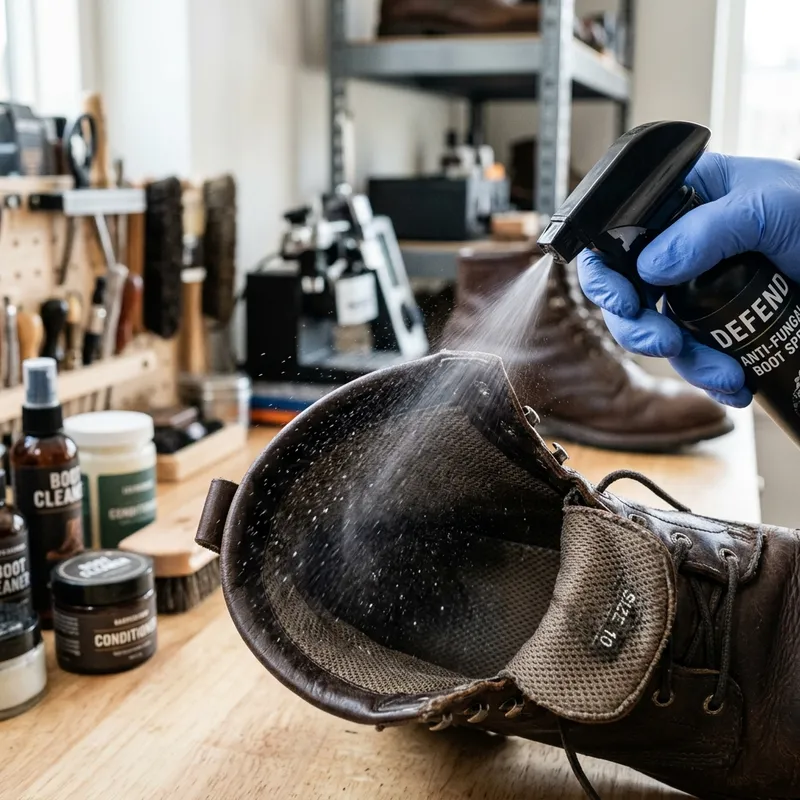
This article is not linked to any before–after case file cleared for publication. Images in this article are topical illustrations only, not a guarantee of results for every pair.
Need Professional Attention for Your Item?
EXTRIM provides two-way doorstep courier pickup across Ho Chi Minh City, with up to 80,000 VND off qualifying orders. Service options, final pricing, timing, and any applicable repair warranty are confirmed for each item.