Why Shoes Stored in the Closet Fall Apart: Glue Failure and 'Deconstructed' Soles Without Ever Being Worn
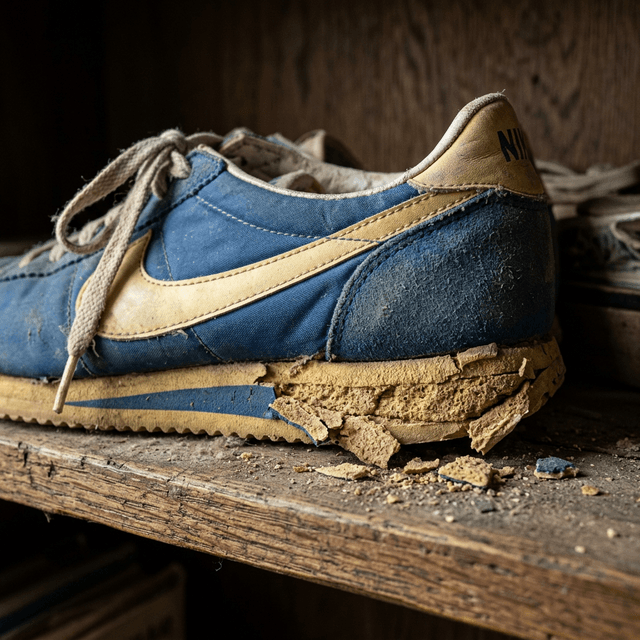
One of the most painful experiences for anyone with a sizable sneaker collection is pulling a limited-edition pair out of its box after a full year in storage, only to watch the heel and sole start shedding pieces within a few hundred meters — the glue failing like old, crumbly cookies.
Plenty of customers have come to EXTRIM asking the same question: "I kept it in a glass cabinet with silica gel packs, never wore it in the rain, barely wore it at all — why did this happen?"
The answer lies in the chemistry of the materials inside the sole, where adhesive aging and hydrolysis have been quietly at work.
1. "Hydrolysis" in PU Materials (For Foam-Soled Shoes)
Modern sneakers and premium leather shoes typically use polyurethane (PU) to mold the cushioning midsole because it is exceptionally soft, springy, and shock-absorbent.
However, PU's Achilles' heel is that it passively absorbs moisture. Vietnam's hot, humid climate drives moisture into every microscopic pore of the foam. Over time, water molecules break the chemical bonds of the polymer network, turning the entire material brittle — it crumbles and falls apart gradually even under no load at all. If you never wear the shoes, the midsole never flexes, trapped moisture stays locked in, and the aging process can actually accelerate.
Practical advice: Shoes are made to be on your feet. Wearing them at a healthy cadence (at least once or twice a month) creates continuous compression and release that pushes trapped moisture out. Sealing them away in a closed cabinet, ironically, is what cuts PU's lifespan short.
2. Adhesive "Drying Out" and Losing Its Bond
Another cause of peeling soles and gaping seams (especially on standard canvas sneakers or flat rubber-soled shoes) is dead glue. Modern shoe bonding relies on heat-activated adhesives. When the shoe sits unused in a sealed, condensation-prone environment, the adhesive film loses its flexible tack, dries out, and powders into grains that collect in the gap between the upper and the outsole.
The Safe, Cost-Effective Fix
If disaster strikes, don't panic and don't rush to the corner store for a tube of 502 glue. Superglue and other cyanoacrylates dry rock-hard, leave residue, and can damage surrounding surfaces — they should never be used on an open sole.
- Cleaning and surface preparation: EXTRIM's standard shoe care process completely removes the rotted, dead adhesive layer, creating a clean, flat bonding surface.
- Professional cement bonding (Barge cement / heat-activated adhesive): A technician preps the surface and applies new adhesive matched to each specific material, using specialized conditioning agents. Most importantly, the bond is pressed under vacuum pressure so no air bubbles remain. Controlled drying at temperatures below 35°C helps preserve maximum flexibility and bond strength.
EXTRIM knows every pair of shoes carries memories. Rescuing them instead of tossing them is far more economical than buying new — and to save you time, EXTRIM partners with Ahamove for door-to-door pickup and delivery on a route of just 3–4 business days.
👉 Stop Creating Your Own Superglue Nightmare. Book a Restoration Solution Here: See Our Sole Regluing & Recovery Pricing
Public Case Study
This article is not linked to a specific before–after case with a publicly cleared case code. It describes general guidance and service categories; results, timelines, and the degree of improvement depend on the actual condition of each pair.
Need Professional Attention for Your Item?
EXTRIM provides two-way doorstep courier pickup across Ho Chi Minh City, with up to 80,000 VND off qualifying orders. Service options, final pricing, timing, and any applicable repair warranty are confirmed for each item.