Why Leather Shoes Get Moldy — and How to Stop It Coming Back
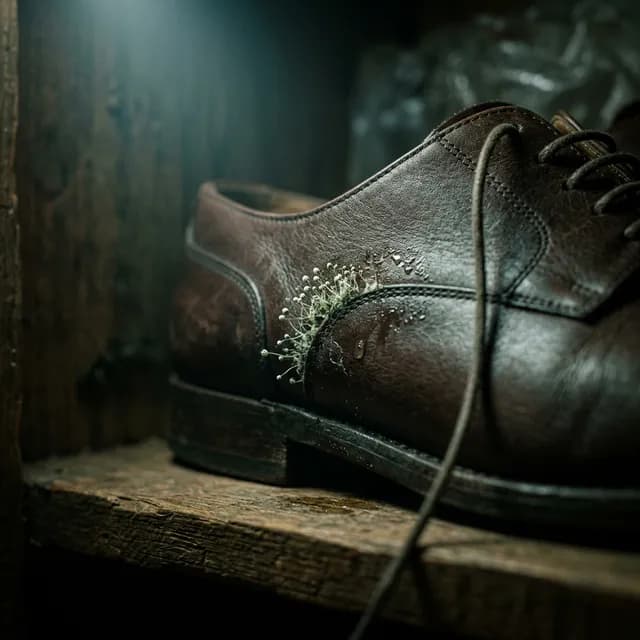
Leather shoes can develop mold when they get damp, are stored somewhere with little airflow, or are put away before fully drying. And mold isn't just a surface problem: the lining, seams, and even your storage cabinet can hold moisture and bring the problem right back.
Conditions That Encourage Mold
- Shoes still damp after rain or long wear.
- Boxes, cabinets, or bags that are sealed with no air circulation.
- Shoes stored close together with no drying time between wears.
- Dirt and sweat left on the leather, lining, or soles.
- Storage areas with persistently high humidity.
There's no single humidity threshold that determines the outcome. Material, temperature, how long shoes stay damp, and ventilation all affect mold risk.
If You've Just Spotted Light Mold
- Isolate the pair from your other shoes.
- Move them to an open area, wear a mask, and use a soft dry brush to remove surface mold.
- Don't scrub hard in a closed room, and don't blow mold spores toward your closet or air conditioner.
- Let the shoes dry naturally, then re-check the leather color, lining, and sole edges.
- Only use cleaning or conditioning products clearly rated for your type of leather, tested on a hidden spot first.
Never spray alcohol, vinegar, or bleach, or soak the shoes based on generic home remedies. These can discolor or dry out the surface — especially on pigmented and delicate leathers.
When to Send Shoes to a Technician?
Send photos or bring the shoes in for inspection if the mold is spreading, the smell returns, the leather is blotching, or the surface has cracked. Pairs exposed to dirty water, with mold in the lining, or with separating glue shouldn't be subjected to more home-remedy experiments either.
EXTRIM inspects the leather, lining, shape, soles, and moisture source before recommending cleaning, deodorizing, mold treatment, or surface restoration. The right service and the possible improvement depend on actual condition.
👉 Send photos of moldy leather shoes for an assessment
How to Keep Mold From Coming Back
- Only store shoes once they and their insoles are completely dry.
- Rotate pairs if you wear them daily.
- Use ventilated boxes or cabinets; desiccant packs are only a supplement.
- Check rarely worn pairs every few weeks in humid season.
- Treat the storage area itself if you notice musty smells or damp patches.
Public case note
This article is not linked to a coded before–after case cleared for public release. The steps above are general guidance; results should not be assumed to be the same for every type of leather.
Need Professional Attention for Your Item?
EXTRIM provides two-way doorstep courier pickup across Ho Chi Minh City, with up to 80,000 VND off qualifying orders. Service options, final pricing, timing, and any applicable repair warranty are confirmed for each item.