What Are Shoe Trees? Types, Materials and How to Use Them

If you have invested in a pair of leather shoes or premium sneakers, shoe trees are the accessory worth buying right after brushes and polish. They are the "wooden feet" you place inside the shoe every time you take it off — and how long your shoes keep their shape depends largely on this small habit.
What shoe trees actually do
A shoe tree mimics the shape of a foot and sits inside the shoe while you are not wearing it. Its main jobs:
- Holding the shape: it fills the toe box and the body of the shoe, limiting the creases that form as leather contracts after a full day of wear.
- Absorbing moisture: sweat and vapor build up inside shoes after each wear; a wooden shoe tree draws that moisture out so the leather dries slowly and cracks less.
- Reducing odor: a dry interior makes it harder for odor-causing bacteria to thrive; some woods also leave a light, natural scent.
- Helping during cleaning: a shoe with a tree inside keeps a flat, stable surface, which makes brushing easier and protects the shoe from deforming under pressure.
Be realistic about the limits: shoe trees prevent new creases, but they do not erase deep creases that have already set, nor fix a collapsed toe.
Wood or plastic: which material?
- Cedar wood: the best choice for leather shoes. It holds the shape, absorbs moisture well, and its scent helps control odor and repel insects. Untreated, uncoated cedar absorbs the best.
- Raw wood (oak, maple, linden…): good absorption, durable, reasonably priced, with a natural look that is easy to recognize.
- Varnished wood: glossy, smooth and easy to wipe — but the varnish seals the wood and takes away most of its absorption and scent. Often pricier, yet not worth it if care is the goal.
- Plastic: the cheapest and lightest, handy for travel. It holds the shape but absorbs nothing and does nothing for odor — better as a backup or short-term option.
Market reference prices for 2026: plastic shoe trees run roughly 50,000–150,000 VND per pair, natural wood around 200,000–500,000 VND depending on size and origin. EXTRIM does not sell accessories — these numbers are only for comparison.
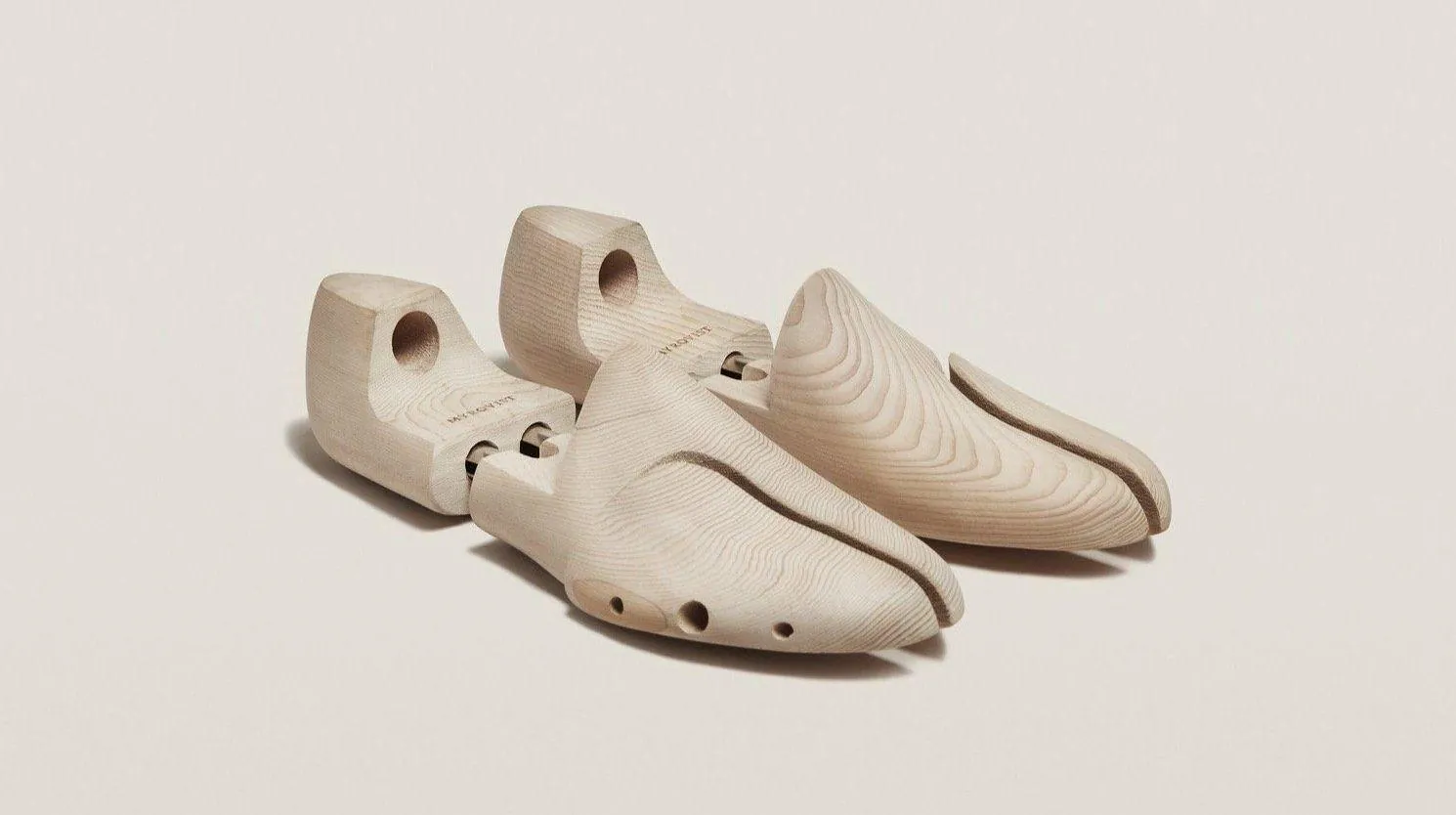
Common shoe tree styles
- Split-toe: the forepart is split with a spring that flexes to fit different toe shapes — the most sensible choice for most shoes. If the fit feels too tight, go one size down on the tree so it does not press back against the toe box.
- Full-toe: a one-piece forepart with adjustable length. Affordable, but the generic shape never fits any shoe precisely.
- Boot tree: comes with an extended back to hold the shaft — only really needed for boots.
- Hollow tree: lighter and easy to carry; beyond the weight advantage, it offers little extra.
- Lasted / bespoke: made to match one specific pair, the most precise and safest fit — usually found with high-end shoes or custom orders.
- One-spring ("spring") trees: avoid them. The heel piece is too small to support anything and can even let the shoe warp over time.
Do sneakers need shoe trees?
Yes — especially leather and faux-leather sneakers. Premium sneakers deserve the same upkeep as traditional dress shoes:
- Sneakers with lots of leather details absorb moisture and develop odor easily — wooden shoe trees suit them best.
- Canvas and mesh sneakers still benefit: the tree holds the toe shape and limits creasing across the toe box.
- One pair per shoe, no sharing. The time shoes spend on the shelf is exactly when they need trees the most.
- After a wet wash, wipe the surface dry and insert trees so the shoes keep their shape while air drying.
How to insert a shoe tree
- Loosen the laces, insert the forepart first and push it all the way into the toe box.
- Compress the spring and bring the heel piece into the shoe.
- The best moment is right after you take the shoes off — the leather is still warm and returns to shape more easily.
- Rotate at least two pairs so each shoe rests about 24 hours between wears.
When to hand them to EXTRIM
Shoe trees keep your shoes in shape from today onward, but set-in creases, faded leather or stubborn odor do not resolve on their own. For creases, start with safe ways to remove creases at home or read our leather crease restoration guide; for polished leather, see our piece on shining shoes before doing it yourself. Heavily soiled shoes, yellowed soles or long-term odor belong with EXTRIM's shoe cleaning service — dress and office shoes run 150,000–200,000 VND per pair (2026 reference), final quote after inspection.
👉 Send photos of your shoes for a condition assessment
Public case studies
Photos in this article illustrate the process — they are not a before–after record with a public case code. EXTRIM does not use illustrative images to promise results for every pair.
Need Professional Attention for Your Item?
EXTRIM provides two-way doorstep courier pickup across Ho Chi Minh City, with up to 80,000 VND off qualifying orders. Service options, final pricing, timing, and any applicable repair warranty are confirmed for each item.