What Is Topy? Thin Sole Protectors for Leather Dress Shoes vs Vibram
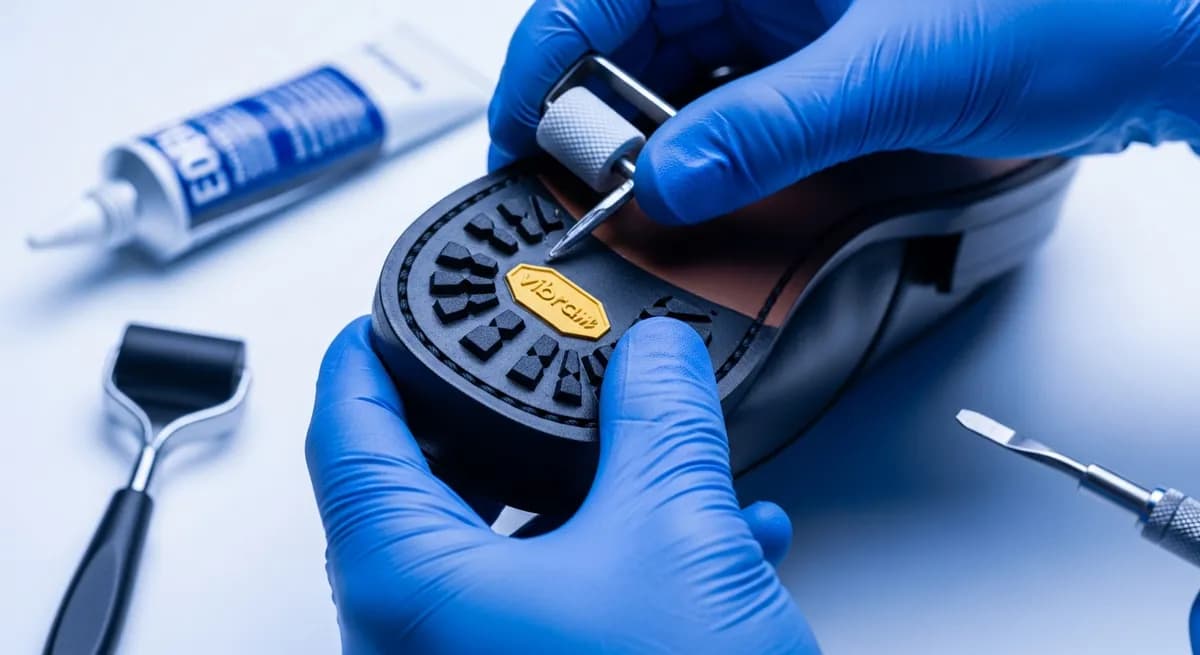
The leather soles of dress shoes, leather boots and office shoes wear down quickly with daily use, especially on wet pavement. Gluing on a thin protector sheet such as Topy is the traditional cobbler's way to preserve the original leather sole. This article explains what Topy is, how it differs from Vibram, what a proper gluing process looks like, and when you should not attempt it yourself.
What Is Topy? How Does It Differ From Vibram?
Topy is a thin rubber sheet, usually only about 1–2mm, glued onto the surface of the original leather sole. The sheet takes the wear instead of the leather and adds grip on wet ground. When it wears out after a long period, a cobbler removes the old layer and glues on a new one, while the leather sole underneath stays intact.
Vibram is different in nature: a thicker rubber sole with a pronounced tread, used to cover the entire sole surface or to resole sneakers and outdoor shoes. On leather-soled shoes, Vibram changes the sole's appearance far more than a thin sheet. You can read more about why Vibram sole protection is worth it to understand that family of solutions.
There is also Sole 3M — a transparent polymer film for sneakers that keeps the original sole pattern fully visible. Our comparison of Sole 3M and Vibram covers those two in detail; Topy sits closer to the "thin film" group but serves leather-soled shoes specifically.
| Criteria | Topy | Vibram | Sole 3M |
|---|---|---|---|
| Form | Thin sheet, about 1–2mm | Thicker rubber, clear tread | Thin transparent film |
| Best for | Dress shoes, leather boots, heels | Sneakers, outdoor shoes | Sneakers needing original sole look |
| Appearance | Trimmed flush, hard to notice | Obvious, sporty | Transparent |
| On leather soles | Glued over the original sole | Usually covers the whole sole | Rarely used on leather soles |
What You Gain — and Trade Off — With a Sole Protector
Real benefits:
- The original leather sole is preserved. Repairing a sole after it has worn deep is far more complicated and costly than protecting it from the start.
- Better grip. Smooth leather soles are risky in the rain; a thin rubber layer noticeably improves traction on wet ground.
- Appearance. The sheet is trimmed flush to the edge, so the shoe's silhouette barely changes — far from the "bulky added layer" many people worry about.
- Reasonable cost. A protector sheet costs much less than a full resole or restoring a sole that has already failed.
Trade-offs to know:
- The shoe gains a little weight, a few dozen grams per pair — most wearers never notice.
- After a few years the sheet wears out and needs regluing; the cobbler must remove the old layer and clean the glue thoroughly first.
- Quality depends on craftsmanship: a misaligned sheet or glue seeping onto the leather edge is very hard to fix once the glue has set.
The Proper Topy Gluing Process
- The cobbler measures the sole and cuts the sheet to match, leaving a margin for trimming later.
- Both the sole surface and the inside of the sheet are lightly sanded so the glue bonds better.
- Sanding dust is wiped off with a dry cloth; the leather sole is never dampened before gluing.
- A thin, even layer of glue goes on both surfaces; once it turns tacky, the sheet is pressed on firmly from toe to heel.
- The shoe is held under professional pressing equipment for several hours so the bond sets.
- The edge is trimmed with a specialty knife, angled inward for a clean bevel.
- The glue cures fully for 12–24 hours before the shoes are worn outside.
Should You Glue Topy at Home?
The sheet and glue can be bought, but the process calls for a trimming knife, proper adhesive and experience in positioning. Shoe glue sets fast: a 1–2mm misalignment is nearly impossible to correct, and glue that seeps onto the leather above the sole is very hard to remove without leaving marks.
A DIY job also carries no warranty, and a badly aligned sheet can make the shoe feel uneven underfoot. For a leather-soled pair worth keeping, having a cobbler do it is far safer than a first attempt at home.
When to Send Your Shoes to EXTRIM?
Glue on a sole protector as soon as the shoes are new, or when the leather sole has worn down by about a third. Also stop self-treating and see a technician when the sole is slippery on wet ground, when an old bond is coming loose, or when the heel is wearing unevenly on one side.
EXTRIM's sole protection service follows exactly the process above, with a 2-month glue warranty. Reference rates for 2026: Vibram sole protection 599,000 VND, Sole 3M 599,000 VND, heel cap replacement for dress shoes 250,000 VND. Final pricing is confirmed after we inspect the shoes.
Read next: Vibram sole protection done right and our guide to Vibram sole protection.
👉 Send photos of your soles to get a condition assessment
Public Cases
Photos in this article illustrate the process — they are not a before–after record with a public case code. EXTRIM does not use illustrative images to promise results for every pair.
Need Professional Attention for Your Item?
EXTRIM provides two-way doorstep courier pickup across Ho Chi Minh City, with up to 80,000 VND off qualifying orders. Service options, final pricing, timing, and any applicable repair warranty are confirmed for each item.