Repainting Leather Shoes: When to DIY and When to Send Them In
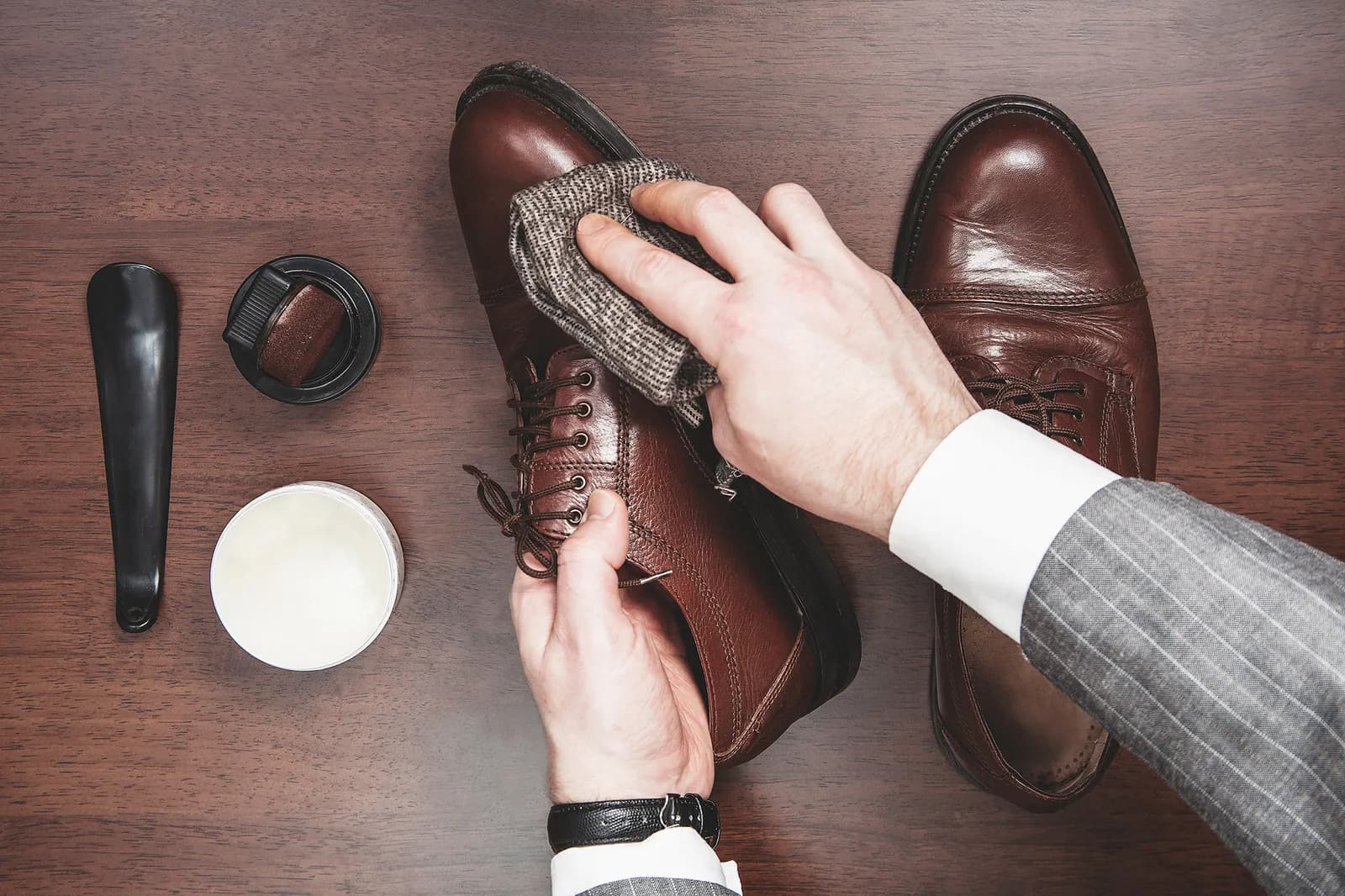
Many people assume a faded pair of leather shoes is finished, but in most cases the leather itself is fine and only the surface needs refreshing. The catch is that repainting is not something every shoe should go through: some pairs turn out fine with a home job, while others end up blotchy and peeling — worse than before. This guide sorts damage into levels, tells you when DIY is realistic, and walks through a safe process.
The damage level decides the treatment
Before picking up a brush, work out which level your pair is at:
- Dull, tired color but no peeling: a proper clean for the material plus conditioning usually restores the shine. The lightest level — no paint needed.
- Peeling, uneven fading, scuffs through to the base leather: the finishing layer is gone, and wiping or conditioning cannot cover it. This is where repainting earns its place.
- Deep gouges, torn leather, cracking along the toe crease: the base needs repairing first (filling, leveling) before any color goes on — the hardest level to control at home.
When repainting at home is realistic
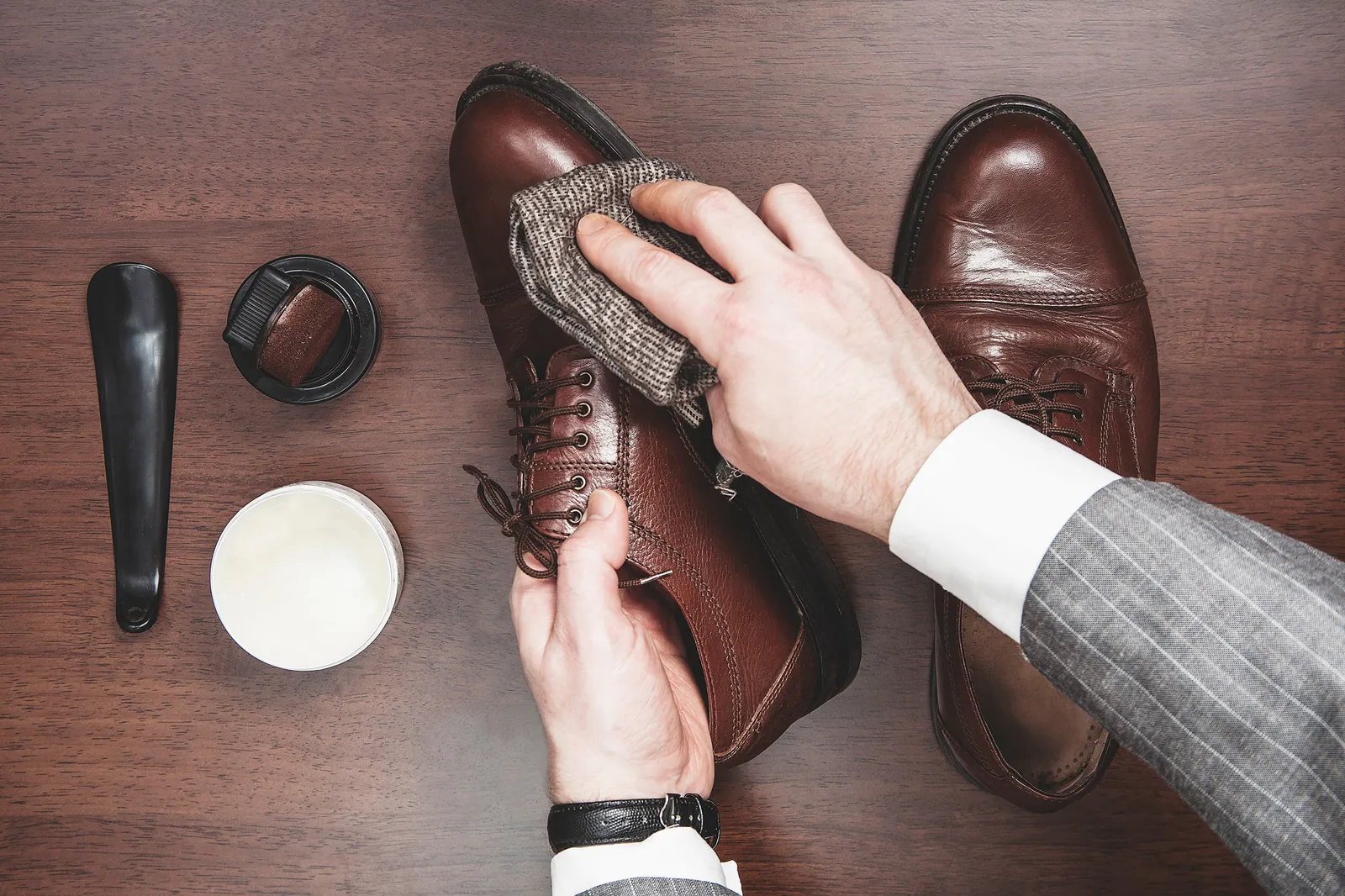
DIY works when all of the following are true:
- The shoes are everyday pairs, not limited editions or pieces with resale value — repainting changes the original finish, and on collector pieces that costs a fixed amount of value that cannot be recovered.
- The peeling is concentrated in a small area, not spread across the whole upper.
- The leather is finished smooth leather — drip a little water on the surface; if it beads up, the leather has a protective coating.
- You have leather-specific paint — not wall paint, wood paint, or fabric dye — and the patience to do it slowly: test the color, apply thin coats, let each one dry.
Do not attempt it when: the shoes are suede or nubuck (this material is recolored with dedicated dye; smooth-leather paint clumps and ruins the nap), the peeling covers a wide area, or you have never tested the color on a hidden spot first. If you want to change the color of suede shoes, see our guide on dyeing suede shoes at home to understand this material's limits.
A safe repainting process for beginners
Step 1: Clean and dry completely. Wipe the whole surface with a leather-specific cleaner, remove the laces and wash them separately, then let the shoes air-dry for 24 hours in a ventilated spot. Never use strong alcohol or acetone to strip old paint — these chemicals eat into the leather underneath and make the new coat peel even faster.
Step 2: Mask everything you are not painting. Use masking tape on the sole edges, the lining, and every detail outside the paint zone. Insert shoe trees or stuff soft paper to hold the shape while you work.
Step 3: Test the color first, then apply thin coats. Brush a thin test coat on a hidden spot (the inside of the heel, under the tongue) to see how the color takes when dry. Only then cover the wider area — and always apply several thin coats instead of one thick one: thick coats run, and they crack along the toe crease within weeks. Let each coat dry per the label instructions.
Step 4: Air-dry, then condition. After the final coat, let the shoes dry for at least 24 hours away from sunlight and any heat source — a hair dryer bubbles the paint and wrinkles the leather. Once fully dry, finish with leather conditioner to keep the leather supple, then add a protective coating so the color better resists water and dust.
Mistakes that ruin the shoes
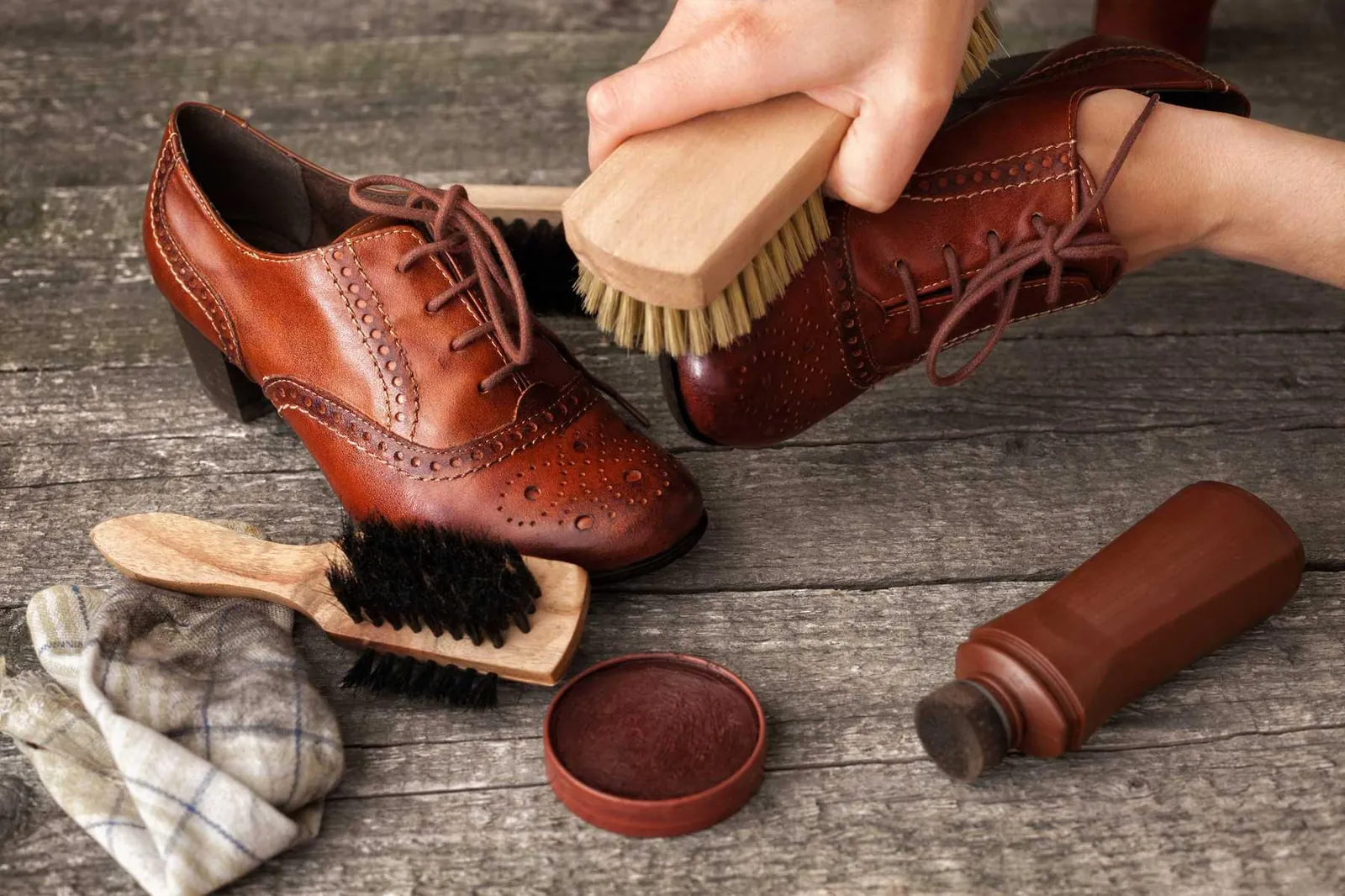
- Painting over shoes that are still damp or still carrying old conditioner — the paint will not bond and peels off in sheets.
- One thick coat "to save time" — it cracks and peels along the toe crease within weeks.
- Stripping the base with alcohol, acetone, or bleach — burns the leather and leaves blotches that cannot be fixed with ordinary means.
- Using smooth-leather paint on suede, or mixing a color without testing — a mismatch that is nearly impossible to undo.
- Repainting a resale-value designer pair without thinking it through — read our analysis of whether repainting shoes hurts resale value first.
When to send them to EXTRIM?
Stop DIY when the peeling covers a wide area, when you need a mixed color from two or more pigments, when the leather was damaged by a previous paint job (blotching, peeling, stiffness), or when deep gouges need base repair before color. EXTRIM performs repaint work with a 2-month paint warranty, at 2026 reference prices: white or black repaint for the upper or the sole at 450,000 VND per pair, mixed-color repaint (two or more colors) from 550,000 VND per pair, and a combined upper + sole package for one pair at 810,000 VND. Final pricing is confirmed after we inspect the actual condition of the shoes.
See details on our shoe restoration service, or read when to fix yellowed soles at home and when to call an expert and how to restore old shoes step by step.
👉 Send photos of your pair for advice on whether a repaint makes sense
Public case records
Photos in this article illustrate the process — they are not a before–after record with a public case code. EXTRIM does not use illustrative images to promise results for every pair.
Need Professional Attention for Your Item?
EXTRIM provides two-way doorstep courier pickup across Ho Chi Minh City, with up to 80,000 VND off qualifying orders. Service options, final pricing, timing, and any applicable repair warranty are confirmed for each item.