Our Shoe Cleaning Process: Inspection and Treatment by Material
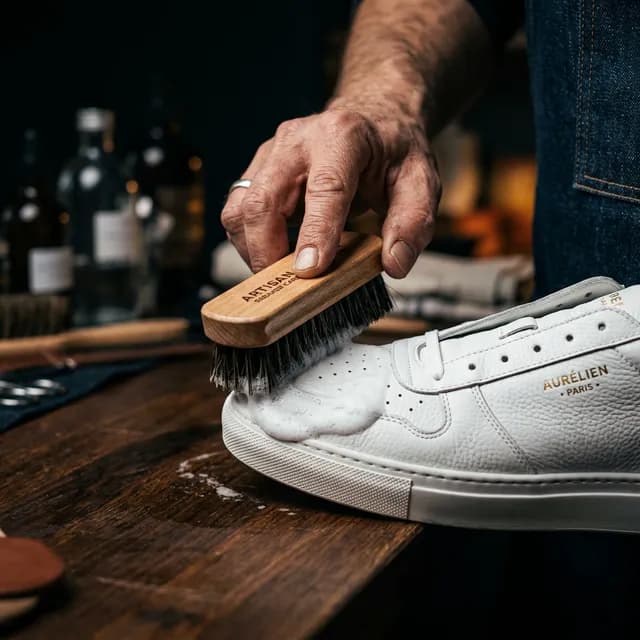
Many people lump every type of shoe cleaning together as "washing shoes." In reality, smooth leather, suede, mesh, canvas, and soles do not respond the same way to water, cleaning solutions, or heat. A good process therefore starts by understanding what's actually wrong with the shoe, rather than forcing everything through the same treatment.
This article describes the groups of steps typically found in EXTRIM's shoe care process. The number and order of steps can vary depending on material, construction, how dirty the shoes are, and the services the customer requests.
1. Intake and Condition Documentation
Before any work begins, the technician inspects the pair as a whole and photographs areas with stains, scuffs, loose glue, fading, or deformation. Any pre-existing issues are recorded on the intake form so both sides share the same baseline for comparison.
If the shoes have removable accessories, laces, insoles, or easily misplaced parts, these are documented separately too. It's a small step, but it prevents disputes about the before and after condition.
2. Identifying Material and Construction
The technician distinguishes the main materials and accompanying details: smooth leather, suede, nubuck, mesh, canvas, rubber, foam, coatings, or printed/embossed elements. A single pair can contain multiple materials, so a method safe for the upper may not be safe for the sole or logo.
Certain risks must be flagged upfront: color bleeding, shrinkage, fiber damage, changes in sheen, coating peeling, visible oxidation, or already-weakened glue. If the risk is high, the safest option may be localized treatment only — or declining a service that isn't appropriate.
3. Setting Treatment Goals and Spot-Testing
You may want dirt removed, odor reduced, mold treated, stains improved, or color restored. These goals require very different levels of intervention. Before any broad treatment, the solution and technique should be tested on a hidden area or a small equivalent patch to observe how the material reacts.
Results are advised based on real condition. Surface dirt usually has better improvement potential than discoloration from oxidation, absorbed ink, leather that has lost its finish, or aged glue.
4. Removing Dust and Treating Stains
Dry dust, sand, and residue are removed first so they aren't scrubbed deeper into the surface. Stains are treated zone by zone, with the right brush pressure and solution for each. Not every stain should be attacked with force; when the material starts to fuzz, fade, or change color, continuing to scrub does more harm than good.
5. Cleaning by Material Group
- Smooth leather: controlled cleaning first, then appropriate conditioning and finishing.
- Suede and nubuck: minimal water, controlled brush pressure, and techniques that preserve the nap.
- Mesh and canvas: focus on dust and dirt in the fibers and the risk of color bleeding; proper drying is essential.
- Satin and delicate fabrics: blot gently with a damp, cold-water cloth instead of rubbing — rubbing pushes dirt deeper into the fibers; for deeper cleaning, use a mild solution and let them air-dry.
- Rubber and foam soles: treated separately from the uppers for residue, without assuming every stain can return to its original color.
- Sensitive details: logos, coatings, contrast leathers, and synthetics must be checked individually.
6. Drying and Shape Retention
After cleaning, shoes are dried under conditions suited to the material and shaped to minimize creasing or deformation. High heat, harsh sunlight, and close-range blow drying can soften glue, shrink leather, or alter coatings. For shoes still damp in the lining and footbed, wiping the outside isn't enough.
7. Quality Check and Handover
Before return, the team re-checks every documented area, accessories, shoe shape, and dryness. If a mark can only be reduced rather than fully removed, the result is stated clearly — instead of using words like "like new" or "absolutely clean."
When to Ask First Instead of Trying It Yourself
Send photos for an assessment first if the shoes involve suede, satin or delicate fabrics, light colors, old mold, water marks, loose glue, fading, interior odor, or high value. When sending photos, capture the whole shoe plus close-ups of the problem areas, along with any history of washing, heat drying, or chemical treatments.
Public case note
This article is not linked to a coded before/after case cleared for public release. The steps above are a framework guide; results, turnaround time, and degree of improvement depend on the actual condition of each pair.
If you need advice, you can book pickup and delivery in Ho Chi Minh City or send photos of the current condition so EXTRIM can assess the right service before taking the job.
This article was edited by the EXTRIM content team and professionally reviewed by the technician in charge of shoe cleaning and restoration.
Need Professional Attention for Your Item?
EXTRIM provides two-way doorstep courier pickup across Ho Chi Minh City, with up to 80,000 VND off qualifying orders. Service options, final pricing, timing, and any applicable repair warranty are confirmed for each item.