How to Store Shoes at Home: 5 Things to Do and the Mistakes to Avoid
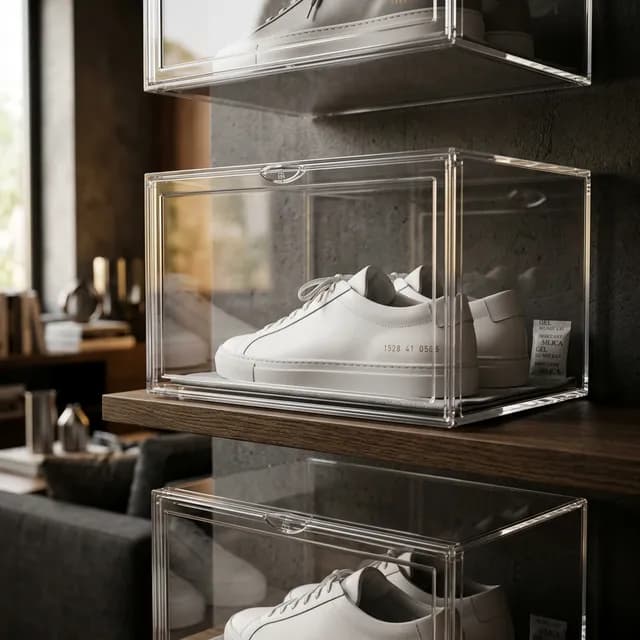
Sneakers don't only wear out from dirt. Sweat, rain, heat, sunlight, and how you store them can all flatten the shape, discolor the surface, or age the sole glue prematurely. The best storage strategy is to handle each small risk before it becomes damage that's hard to fix.
1. Dry shoes completely before storing
After a rainy walk or a long day of wear, remove the laces and insoles if possible. Blot moisture with a dry towel, stuff with clean paper to hold the shape, and place the shoes in a breezy spot.
Never place shoes against a heat source and don't leave them under harsh sun for long. High heat can dry out the leather, warp materials, or stress the glue. Swap out paper once it gets damp; only store the shoes once the body and lining are fully dry.
2. Maintain shape according to the material
Shoe trees help prevent creases during long storage. For fabric sneakers or soft-structured shoes, loosely crumpled clean paper works as a temporary substitute.
Don't overstuff. Constant pressure can stretch the toe box or create creases in unwanted places. If the heel has already collapsed, reshape it gently before cleaning rather than forcing it.
3. Store in a dry, ventilated place
Sealed boxes are only appropriate for shoes that are clean and fully dry. Open shelving or cabinets with gaps usually suit everyday shoes better. Desiccant packs help in humid seasons, but they don't replace drying — and never place them directly on leather surfaces.
Inspect shoes periodically, especially the ones you rarely wear. Early warning signs include musty odor, white or green spots, discolored lining, and sole edges starting to lift.
4. Match products to materials
Never use one solution on every pair. Smooth leather, suede, canvas, mesh, and synthetics all have different water tolerance and finishes.
If you use waterproofing sprays or conditioners, test on a hidden area first, read the product instructions, and let the surface dry before judging the color. More spray does not mean more protection; excess coating can suffocate the surface or alter its shine.
5. Clean according to how much you wear them
There is no universal schedule. Daily-wear shoes, rain-soaked pairs, or sport use need far more frequent checks than special-occasion pairs.
Dry dust can be brushed off at home. For oil stains, mold, color bleed, widespread fading, or shoes with many glued panels, stop experimenting if you don't know the material and send photos for assessment. Acting early usually preserves more repair options.
When should you send shoes to EXTRIM?
Bring or send your shoes to a technician when:
- Mold has spread into the lining, or the odor returns after drying.
- Leather shows blotching, deep scratches, or widespread fading.
- The sole is lifting, cracking, wearing unevenly, or the shape is deformed.
- You can't identify the material or the right product.
This article provides general storage guidance and doesn't replace hands-on inspection. EXTRIM assesses the condition and advises the appropriate service before any work.
👉 Explore EXTRIM's shoe cleaning and repair services
Public case studies
This article is not yet linked to a specific customer case. Once before–after photos and a case code are cleared for publication, EXTRIM will add them along with the treatment scope and result limits.
Need Professional Attention for Your Item?
EXTRIM provides two-way doorstep courier pickup across Ho Chi Minh City, with up to 80,000 VND off qualifying orders. Service options, final pricing, timing, and any applicable repair warranty are confirmed for each item.