Storing 20+ Pairs of Sneakers in a Humid Climate: Inspection Schedule and Storage Method
Storing 20+ pairs of sneakers in a humid climate like Saigon's is a genuine challenge — mold, moisture, and PU sole degradation can wreck a collection in months. The right system: store shoes in a ventilated environment with desiccant, inspect every 30–60 days, rotate wear so nothing sits too long, and treat mold the moment it appears. The most common mistake is sealing shoes in plastic boxes or stuffy cabinets — a perfect incubator for mold. If you spot mold, yellowing, or crumbling soles, isolate that pair and send photos for advice right away.
The risks of bad storage in humid climates
- Mold: thrives in sealed, humid boxes and spreads from pair to pair.
- PU sole hydrolysis: shoes stored for years can crumble as PU absorbs moisture and breaks down.
- Yellowed glue lines: oxidation accelerates in hot, humid environments.
- Shape loss: without shoe trees, shoes collapse and develop deep creases.
- Musty odors: soak into fabric and foam, and are hard to remove once set.
- Fading: light and humidity bleach both fabric and leather.
The right storage system for 20+ pairs
1. Choose the storage spot
- Ventilated shoe cabinet: prefer cabinets with air vents or mesh doors — not sealed glass cabinets.
- Open shelving with a fan nearby, or near a window (out of direct sun).
- Avoid sealed plastic boxes without desiccant packs — plastic traps moisture inside.
- Original cardboard boxes beat plastic boxes, since cardboard breathes slightly.
2. Prepare shoes before storing
- Clean them completely first — dirt and dampness are the source of mold.
- Air-dry naturally for at least 24 hours before storing.
- Remove the insoles for long-term storage and store them separately in the open.
- Insert cedar shoe trees to keep shape and absorb moisture.
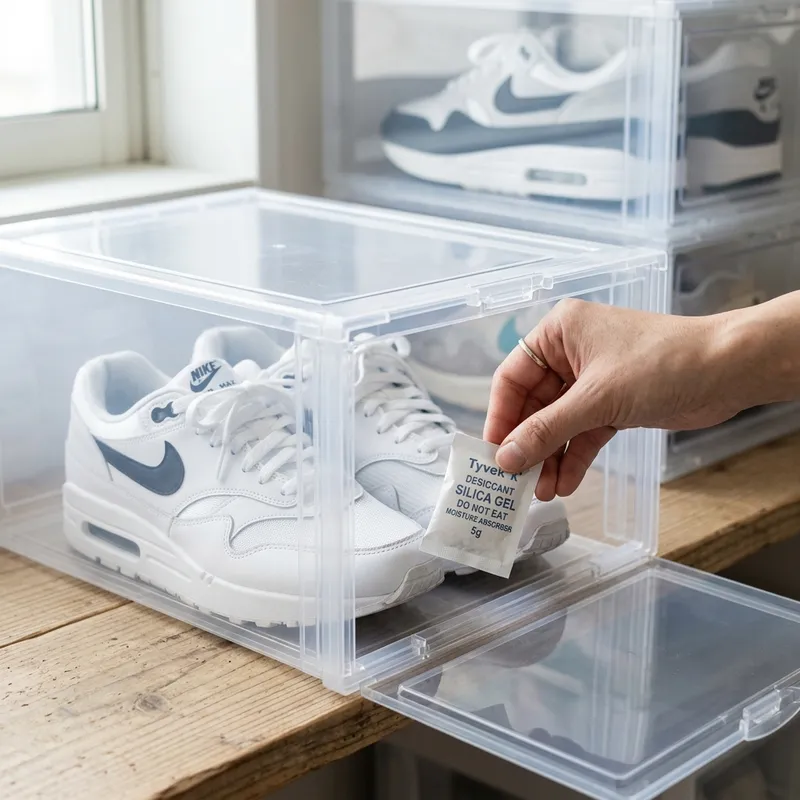
- Tuck silica gel packs inside each shoe; replace every 2–4 weeks.
3. Inspect on a schedule
| Frequency | Task | Purpose |
|---|---|---|
| Every 30 days | Quick scan of the whole cabinet, check for mold | Catch mold early |
| Every 60 days | Pull shoes out, light brushing, replace desiccant | Keep shoes fresh |
| Every 90 days | Check PU soles, glue lines, shape | Catch hydrolysis and glue failure |
| Every 180 days | Rotate stored pairs into wear rotation | Prevent long idle storage |
4. Rotate your wearing
- Never leave a pair stored for more than 6 months without checking.
- Wear 2–3 pairs from the collection each month to keep the shoes "alive."
- Swap the desiccant packs whenever you rotate.
- Check PU soles during rotation — if they feel crumbly or show cracks, act immediately.
Decision table: DIY storage vs professional help
| Situation | Handle yourself | Send photos for advice | Go to EXTRIM |
|---|---|---|---|
| Stored correctly, no mold yet | Yes | ||
| Small mold spots found | Recommended | ||
| Mold spreading across pairs | Recommended | ||
| PU soles starting to crumble | Recommended | ||
| Yellowed glue lines on multiple pairs | Recommended | ||
| Musty smell in the cabinet | Recommended |
Common storage mistakes
- Sealed plastic boxes without desiccant: a closed humid box is a mold incubator.
- Storing dirty or wet shoes: dirt and dampness feed mold directly.
- Skipping shoe trees: shoes collapse, toe creases set deep, leather cracks.
- Storing near heat or in sunlight: fades colors and embrittles materials.
- No periodic inspection: mold and hydrolysis progress silently — by the time you notice, it's severe.
- Shoes packed tightly together: mold spreads pair-to-pair through contact.
When professional intervention is needed
- Mold spots appear: treat early, before they spread.
- PU soles crumble or crack: hydrolysis has begun — assess the extent.
- Yellowed glue lines on multiple pairs: needs professional treatment, don't bleach at home.
- Musty cabinet smell: find the moisture source and clean the storage area.
- Cracked or faded leather: needs professional conditioning and restoration.
See also: shoe cleaning service in Ho Chi Minh City, our article on is nano coating for shoes really necessary, and shoes still smell after mold is wiped off.
FAQ
Should I store shoes in their original boxes?
Original cardboard boxes are better than sealed plastic, since cardboard breathes. But you still need desiccant and periodic checks. If your cabinet is ventilated, open shelving with shoe trees beats boxes altogether.
How often should I check stored shoes?
A quick visual scan every 30 days and a thorough check every 60 days. If you find mold or odor, act immediately to stop it spreading.
Can crumbling PU soles be repaired?
Depends on severity. Mild hydrolysis can be reinforced, but if the sole is mushy, it needs replacing. Send photos for a specific assessment.
What shoe trees are best for sneakers?
Cedar wood shoe trees are the best — they absorb moisture and deodorize naturally. Avoid plastic trees, which absorb nothing.
How often should I replace desiccant packs?
Every 2–4 weeks depending on ambient humidity. If you live near a river or in a very humid area, replace more often.
Does mold really spread between pairs?
Yes. Mold spores travel through contact and the air inside sealed cabinets. Isolate any moldy pair immediately and treat it early.
If you own a large sneaker collection and want proper storage advice, send photos of your cabinet and a few pairs to EXTRIM on Zalo, or book a regular cleaning schedule in Ho Chi Minh City.
Edited by the EXTRIM content team and professionally reviewed by the technician in charge of sneaker storage and restoration.
Public case studies
This article is not yet linked to a before–after record with a case code cleared for publication. The content describes general guidance or service categories; results, timing, and level of improvement depend on the actual condition of each pair.
Need Professional Attention for Your Item?
EXTRIM provides two-way doorstep courier pickup across Ho Chi Minh City, with up to 80,000 VND off qualifying orders. Service options, final pricing, timing, and any applicable repair warranty are confirmed for each item.