How to Polish a Leather Bag at Home — Smooth Leather Only
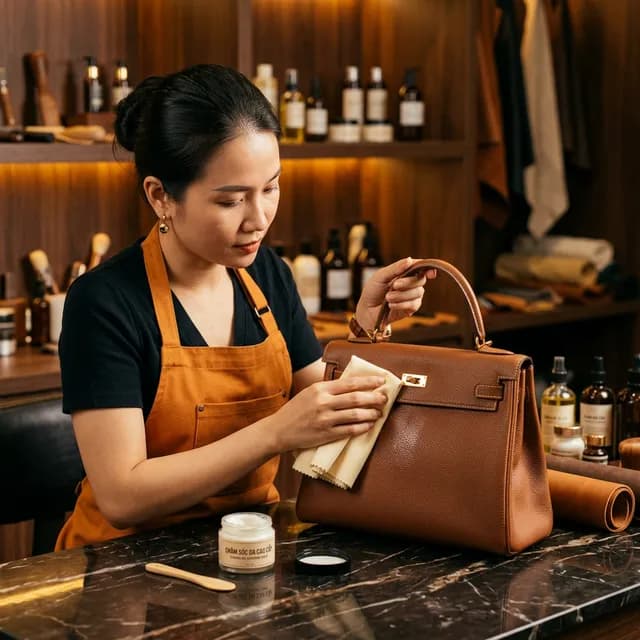
A leather bag fades and loses its shine over time, no matter how premium it was. Polishing done right brings the color back and keeps the leather from drying out — but it only works on a limited set of materials. This guide covers the at-home routine and the limits you need to know before putting polish on a bag.
Cream or wax polish — match it to the bag's condition
The two most common polish types serve different purposes:
- Cream polish: nourishes and evens out color. Best for bags that have faded on high-friction spots like bottom corners and handles.
- Wax polish: adds a thin outer shine. Best for bags that are still in good shape and just dusty or dull.
Wax needs only a small amount, buffed thin. Cream goes on a little more generously so the leather absorbs it evenly. If the fading is widespread, home polishing only improves the surface — the leather underneath is still dry and needs a deeper treatment.
Polish only works on smooth, finished leather
This is the most important limit. Cream and wax polish are suitable only for smooth, hard finished leather — calfskin, polished cowhide on dress shoes, work bags, and leather backpacks.
Never polish these materials:
- Soft, thin leathers (lambskin, soft goat leather): polish absorbs unevenly, stiffens the leather and causes creasing.
- Vachetta (untreated natural leather, common on LV bags): polish darkens it permanently — the original pale tone cannot be restored.
- Suede and nubuck: polish mats the nap and ruins the texture.
- Patent leather: the built-in gloss turns dull and less flexible.
- Synthetic leather (PU, bonded leather): it cannot absorb polish; the layer peels off in flakes.
Not sure what your bag is made of? Do not test on the front panel — a material mismatch is the hardest bag mistake to fix.
What you need
- Cream or wax polish matched to the bag's color (a mismatched shade causes blotches).
- Two clean soft cloths.
- A soft horsehair-style brush for buffing.
- A dedicated leather conditioner.
- A small brush for seams and zippers.
Step 1: Clean the surface
Brush off dust across the whole bag, including seams and zipper lines. Wipe gently with a barely damp, well-wrung cloth. For stubborn spots, use a dedicated leather cleaner — never nail polish remover or household degreasers; a bag's finish is thinner than shoe leather and corrodes easily.
Let the bag dry completely for 10–15 minutes in a ventilated spot before moving on.
Step 2: Condition before polishing
Polish does not replace conditioning. Put a small amount of conditioner on a cloth and rub a thin layer over the surface in circles; let it absorb for 15–30 minutes. This softens the leather so the polish takes on evenly, without dark blotches where the leather drank more product.
Step 3: Apply polish and buff
Apply polish in thin layers, in circular motions, one pass per area. Once the leather has absorbed it for about 15 minutes, buff the whole surface quickly with the soft brush — the friction brings out the natural shine. Want more shine? Add one more thin layer instead of piling product in one spot.
Step 4: Remove excess and store properly
Wipe the entire bag with a clean cloth, paying attention to seams where polish pools. Store the bag in a cool, dry place away from direct sunlight. When not in use, keep its shape with acid-free paper or a bag insert — never old newspaper; ink can transfer to the lining.
A sensible frequency: condition and polish about every one to two months for a bag in daily rotation. Thick or overly frequent polish layers seal the surface and eventually do more harm than good.
Common mistakes to avoid
- Using acetone or nail polish remover to strip old polish — it eats the finish and leaves permanent pale marks.
- Wiping mold spots with white vinegar — mold on bags needs its own treatment; see how to handle mold on a leather bag safely.
- Polishing over damp or wet leather — the polish clumps and the leather traps odors.
- Using a darker polish to "recolor" the bag — blotchy results are very hard to fix.
When should you send the bag to EXTRIM?
Stop at home treatment and send the bag to our luxury bag spa when: fading is widespread or blotchy, the leather stays stiff after conditioning, vachetta has changed color, or you cannot identify the material. Bag spa pricing at EXTRIM is based on the longest side of the bag (reference rates 2026): mini up to 15cm 500,000 VND, small over 15–28cm 600,000 VND, medium over 28–35cm 700,000 VND, large over 35cm 800,000 VND. Full recoloring is quoted after inspection.
👉 Send photos of your bag for a condition assessment
Further reading: caring for and storing leather bags and how to protect a bag's resale value.
Public Cases
Photos in this article illustrate the process — they are not a before–after record with a public case code. EXTRIM does not use illustrative images to promise results for every pair.
Need Professional Attention for Your Item?
EXTRIM provides two-way doorstep courier pickup across Ho Chi Minh City, with up to 80,000 VND off qualifying orders. Service options, final pricing, timing, and any applicable repair warranty are confirmed for each item.