Sole Separation and Loose Glue: When to Reglue — and When to Resole
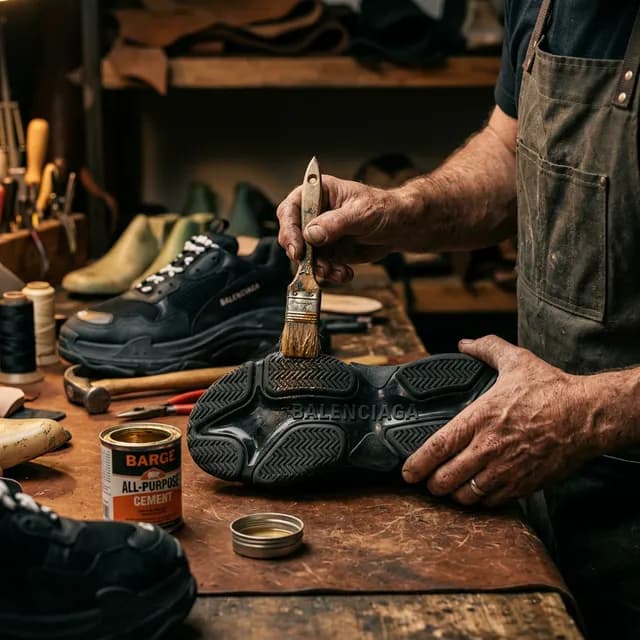
A lifting toe, a peeling heel, or a separating sole usually triggers the urge to fix it immediately with super glue (502). That might hold a small edge temporarily, but it also leaves hard residue, white marks, and contaminates the bonding surface. After that, a technician has to spend extra time removing the old glue before even assessing and regluing properly.
What matters is determining whether the shoe has only a glue-line gap, or whether the sole and base material have actually degraded. The two cases have different fixes — and different expectations.
Why do soles separate or glue fail?
Common causes: aging adhesive, shoes soaked in water then dried with heat, repeated twisting stress on the sole, hardened foam or rubber, and long storage in hot, humid conditions. An older pair can have several causes at once.
Warning signs: a lifting sole edge that keeps widening, glue turning brittle and crumbly, the sole warping, a spongy base surface, or the upper detaching from the midsole. Don't just look at the gap and assume every case is reglued the same way.
Why you shouldn't pour super glue into the gap?
Rigid household glue isn't designed for areas that flex with every step. It makes the bonded edge stiff, leaves white streaks on dark materials, and makes old glue much harder to clean. If it runs into the upper or into tread grooves, the follow-up repair gets even more complicated.
If you need to hold things together while waiting for advice: keep the shoes dry, don't pry the gap wider, and photograph the separated corners. Don't keep trying different glues on the same spot.
What does a technician check?
- Separation scope: a small gap, near-total sole detachment, or just the outer layer lifting.
- Bonding surface condition: still solid, oily, contaminated with household glue, or crumbled and porous.
- Sole and foam condition: still elastic and holding shape, or hardened, cracked, sunken.
- Upper condition: whether the leather, mesh, stitching, and reinforcements can take the work.
- Intended use: daily wear, office, running, or sports — the load and flex differ.
After inspection, the path forward might be cleaning and regluing, local reinforcement, replacing the affected sole section, or — if the base is too degraded — advising against repair. Not every pair is worth fixing, in cost or in safety.
Can you fix minor gaps yourself?
If the gap is very small and the shoes are low-value, still patch-test any product on a hidden area first. For leather shoes, multi-panel builds, foam soles, or valuable pairs, sending photos first is usually the lower-risk route. Above all, never use high heat to press the sole back down — heat can warp the material and damage other bonded joints.
When should you get it checked early?
Get an early inspection if the gap is spreading fast, the sole is misaligned, there's an unusual rubber/glue smell, the shoes have been soaked, or the sole already feels hardened and cracked. Fixing while the base surface is still healthy keeps far more options open than waiting until the sole fully detaches.
Public case studies
This article is not yet linked to a before–after record with a case code cleared for publication. Repairability, timing, and post-treatment durability depend on the material, separation scope, and wear history of each pair.
You can book a shoe inspection at EXTRIM or send photos of the separated sole for advice before bringing it in.
Edited by the EXTRIM content team and professionally reviewed by the technician in charge of shoe repair.
Need Professional Attention for Your Item?
EXTRIM provides two-way doorstep courier pickup across Ho Chi Minh City, with up to 80,000 VND off qualifying orders. Service options, final pricing, timing, and any applicable repair warranty are confirmed for each item.