How to Clean High Heels by Material, the Safe Way
High heels are rarely made of just one material: a leather toe, a fabric body, a wooden sole or a satin upper — each needs its own cleaning method. The wrong approach, like wet-scrubbing satin or using heat to dry faster, leaves stains and warps the shoe worse than the original dirt. Here is how to treat each material safely.
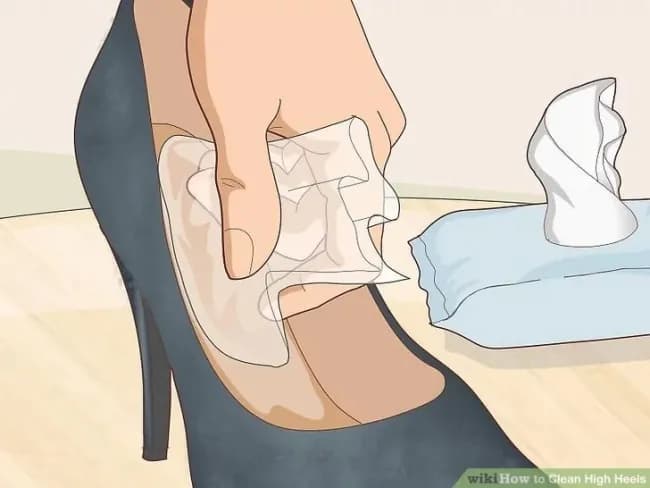
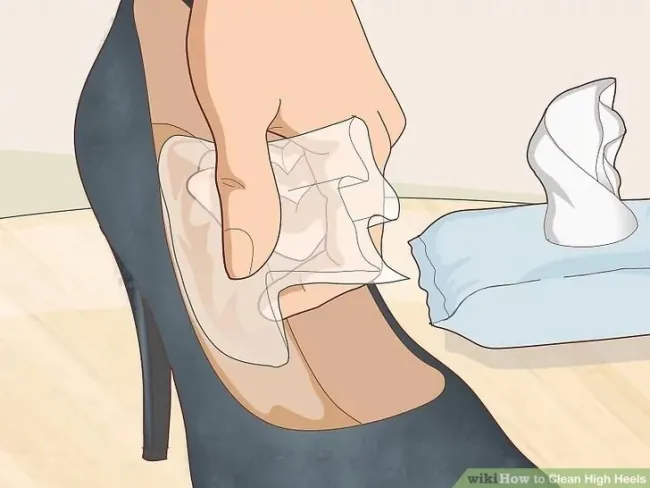
For every pair: clean the inside first
Wipe the inner lining with a damp cloth (or a mild, unscented wipe), paying extra attention to the heel area and toe box where sweat builds up most. Then let the shoes dry completely before wearing them again — putting them on while damp quickly leads to odor and mold.
1. Patent leather
Wipe the whole surface with a clean cotton cloth in circular motions to remove dust and fingerprints. Then apply a thin layer of patent-leather polish, wait 5 minutes, and buff with a clean cloth until shiny. Keep in mind: polish does not remove scratches — scratched patent leather needs professional treatment, not harder scrubbing at home.
2. Smooth leather
Brush the surface lightly with a soft brush, then dip a cloth in warm water with one drop of mild dish soap and wipe the whole body, leaving the sole for last since it is the dirtiest. Wipe once more with a clean damp cloth so no soap residue remains — dried residue leaves streaks on leather. Air dry in a cool, ventilated spot for about an hour; never speed it up with heat, which warps the leather.
3. Fabric and cotton heels
Dampen a clean toothbrush, dip it in baking soda, and scrub gently in circles. Wipe with a cloth dipped in mild soapy water, then again with a clean damp cloth. Never use bleach on white fabric heels: depending on the material, bleach can actually turn them yellow — the exact problem you are trying to fix.
4. Satin heels
Satin loses its structure fast when wet-scrubbed. Only blot stains with a cold, damp cloth — press and lift, do not rub. If water alone is not enough, add a little mild, fragrance-free soap to the cloth, blot again, then blot with a clean damp cloth to rinse the soap out. Air dry in a ventilated spot; in a humid climate like Saigon, a room dehumidifier helps them dry without heat.
5. Suede heels
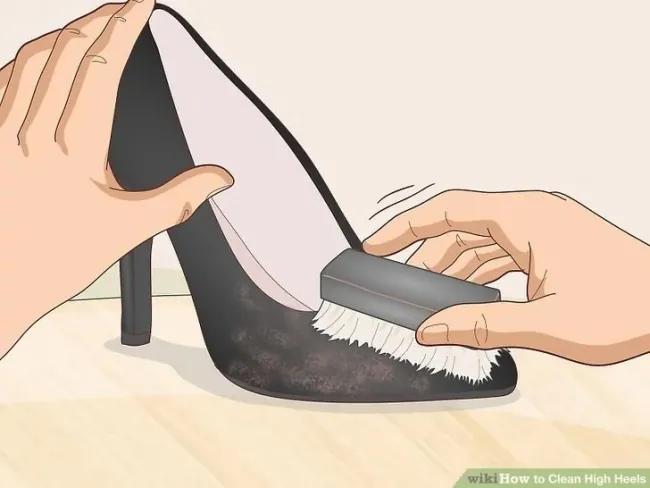
Brush dust off with a suede brush in one direction, use a suede eraser on localized marks, then brush again to lift the nap. Never soak them or use strong cleaning solutions. The full routine is covered in our 6-step suede cleaning guide.
What to avoid
- Heat (hair dryers, hot lamps) to speed up drying — it warps leather and weakens glue.
- Direct sunlight — satin and leather fade fast.
- Bleach, strong alcohol, or acetone on any part of the upper.
- Scrubbing scratches on patent leather — rubbing only makes them more visible.
When to hand them to EXTRIM
Stains soaked into satin, scratches on patent leather, worn or uneven heel tips, and long-set yellowing are the points where home treatment should stop. EXTRIM's shoe cleaning and spa service covers high heels with 2026 reference pricing from 150,000–300,000 VND depending on material and condition; worn heel tips are replaced at 250,000 VND through our shoe repair track. See also our guide on sole protection and heel repair for heels and regular care for dress shoes.
Final pricing is confirmed after we see the actual condition.
👉 Send photos of your heels for a condition assessment
Public case studies
Photos in this article illustrate the process — they are not a before–after record with a public case code. EXTRIM does not use illustrative images to promise results for every pair.
Need Professional Attention for Your Item?
EXTRIM provides two-way doorstep courier pickup across Ho Chi Minh City, with up to 80,000 VND off qualifying orders. Service options, final pricing, timing, and any applicable repair warranty are confirmed for each item.