Football Boot Care After Every Match — A Simple Home Routine
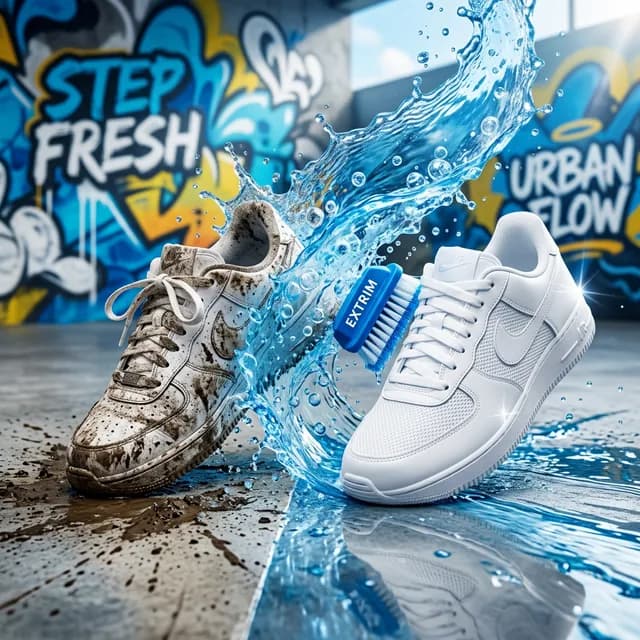
One muddy match can leave your football boots smelly, with the glue lifting and the leather cracking within weeks if you ignore them. Most of that damage comes from skipping the few minutes of care right after the game. The routine below takes about 15 minutes each time and helps keep the shape, the glue and the softness of the upper intact for the whole season.
Pack the right tools in your boot bag
- A popsicle stick or a stiff plastic ruler to scrape mud off the sole, plus an old toothbrush and a soft, absorbent towel.
- Two shoe brushes: a soft-bristle one for the upper and body, a stiffer one for the sole and stud crevices.
- A dedicated shoe cleaning solution, or a mild soap diluted in water if you don't have one yet.
- A few silica gel packs for drying after the match.
One small habit extends boot life noticeably: wear regular shoes for the trip to and from the pitch, and only lace up your boots on the field. Walking on hard pavement in football boots wears the sole down far faster than the game itself.
At the pitch: scrape the mud before you leave
Use the stick to remove mud from the sole while it is still wet — dried mud is much harder to lift and can scratch the sole plate. Once it dries, press the two soles together and tap gently to shake off the remaining debris.
On artificial turf, pull the rubber pellets out of the stud crevices and inside the boot. Each pellet is tiny, but left there day after day they grind down the insole and trap moisture and odor.
Washing step by step once you are home
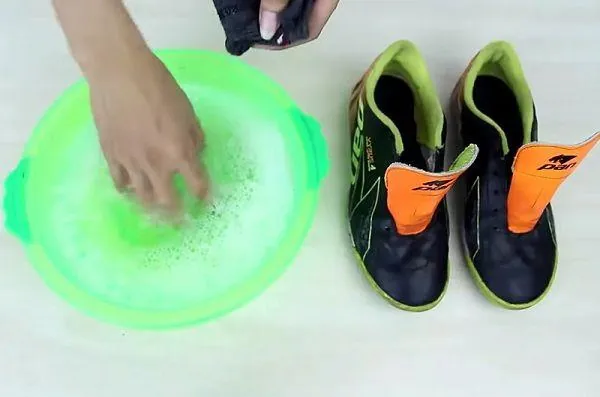
- Remove the laces and the insoles and wash them separately with soap; let them dry before putting them back.
- Wet the boot lightly by hand — never soak the whole pair. Prolonged soaking weakens the glue bond between the upper and the sole.
- Brush the upper with the soft brush dipped in the solution, a few passes per area. For knitted uppers, brush in one direction only so the surface does not fray.
- Switch to the stiff brush for the sole and stud crevices, where mud builds up thickest.
- Rinse with clean water, wipe away all soap residue by hand, then dry with a towel.
Use room-temperature water, never hot — heat stiffens the leather and makes it crack as it dries.
Drying properly — the step that decides boot lifespan
- Stuff the boots with unprinted paper to absorb moisture and hold the shape. Avoid newspaper: the ink can transfer to the lining while the boot is wet.
- Loosen the laces and open the tongue so air can circulate inside.
- Air-dry in a ventilated spot; a fan blowing directly is fine. Avoid harsh sun and every heat source such as a hair dryer — drying too fast stiffens and cracks the upper, especially real leather.
- Never machine wash, machine spin or tumble dry: the spin deforms the eyelet area and heat opens the glue seams.
- Dry the boots after every single match. Never leave the wet socks inside — sweat trapped in the lining is the main source of odor.
Conditioning the leather upper, especially K-leather
Once the boots are completely dry, apply a thin layer of shoe leather conditioner or leather oil to the upper. This replaces the natural oils and keeps the leather supple instead of cracked — nearly essential for K-leather (kangaroo leather) uppers, which are soft but absorb water and dry out faster than synthetic materials. The sooner you wipe K-leather dry after a match, the longer it lasts.
Never use bleach, strong alcohol or acetone on a leather upper — they discolor and strip the finish, and that kind of damage usually cannot be repaired through home care. A proper cleaning solution is all you need.
Storing between matches
- Keep boots in a dry, ventilated place inside a breathable fabric bag, not sealed in a damp box.
- If you play often, rotate at least two pairs so each one dries fully between sessions.
- For screw-in studs: check them after every match and replace worn studs to keep traction; you can also switch stud type and length depending on the surface. Which stud type fits which pitch — TF, FG or IC — is covered in a separate article. Never pry studs off by stepping on the heel; unlace the boot and unscrew them by hand.
- Break a new pair in over a few training sessions before a real match, so the boot molds to your foot and blisters stay away.
When to send your boots to EXTRIM?
Home care covers most post-match work. Stop and send your boots in for these situations:
- Mud-soaked boots, long-standing odor or a damp, moldy lining — the shoe cleaning and spa service handles each material properly; reference 2026 prices: deep cleaning 150,000 VND per pair, heavy-duty cleaning (mud) 200,000 VND per pair.
- Sole glue lifting or edge separation after the rainy season — handled by the shoe repair service with a full sole re-glue and stitching reinforcement; reference 2026 prices from 250,000 to 450,000 VND depending on how far the separation has spread. When light lifting only needs glue and when stitching is required is covered in a separate article on football boot sole stitching.
- Cracked, deeply scratched or peeling leather uppers — these need professional restoration rather than home conditioning.
👉 Send photos of your football boots for a condition assessment
Public cases
Photos in this article illustrate the process — they are not a before–after record with a public case code. EXTRIM does not use illustrative images to promise results for every pair.
Need Professional Attention for Your Item?
EXTRIM provides two-way doorstep courier pickup across Ho Chi Minh City, with up to 80,000 VND off qualifying orders. Service options, final pricing, timing, and any applicable repair warranty are confirmed for each item.