Derby vs. Oxford Shoes: The Real Difference and How to Choose
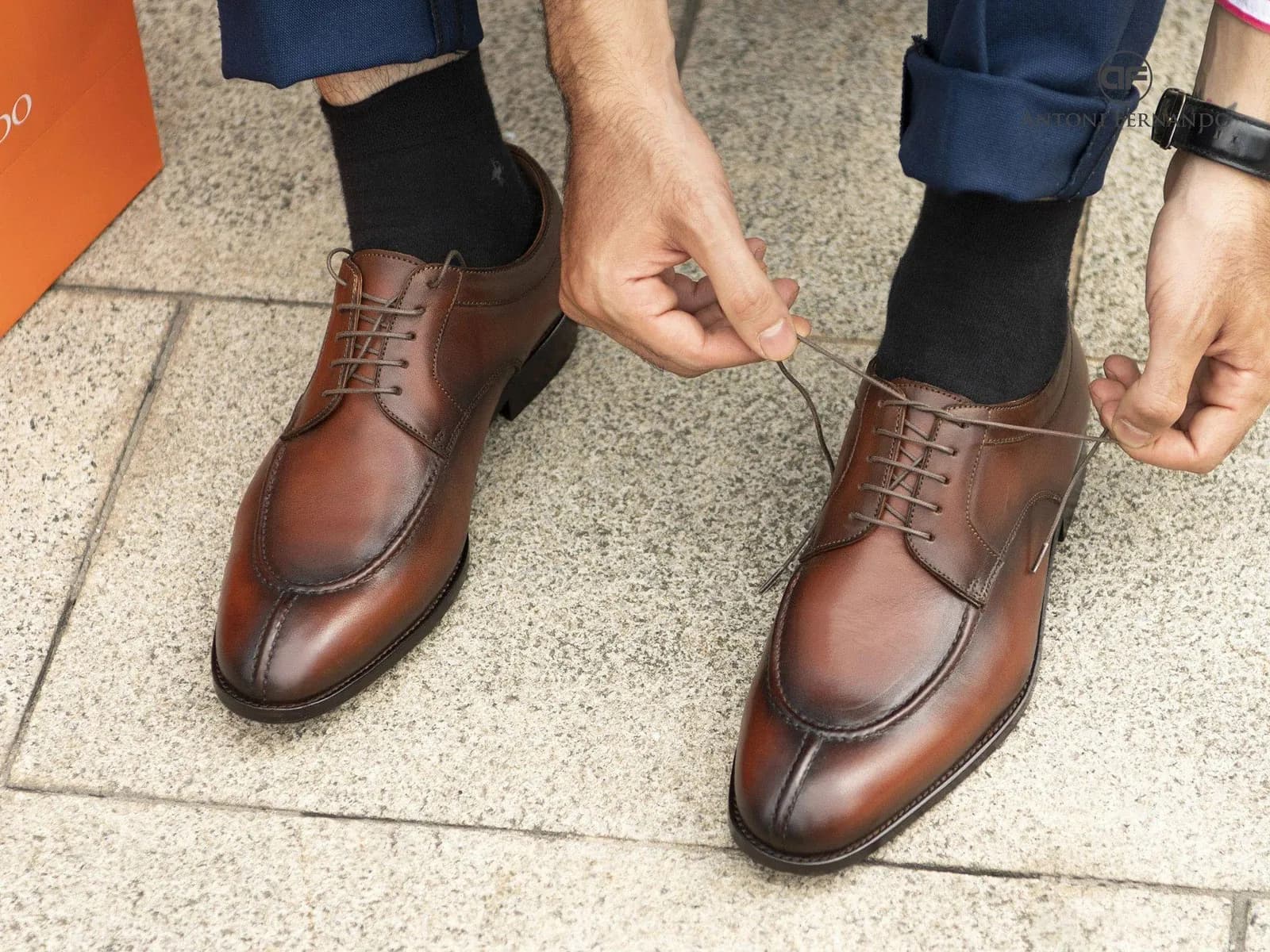
Derby and Oxford are the two most easily confused lace-up dress shoes. The short answer: they differ in how the eyelet panels are stitched onto the upper — and that small detail decides both formality and fit.
The core difference: closed vs. open lacing
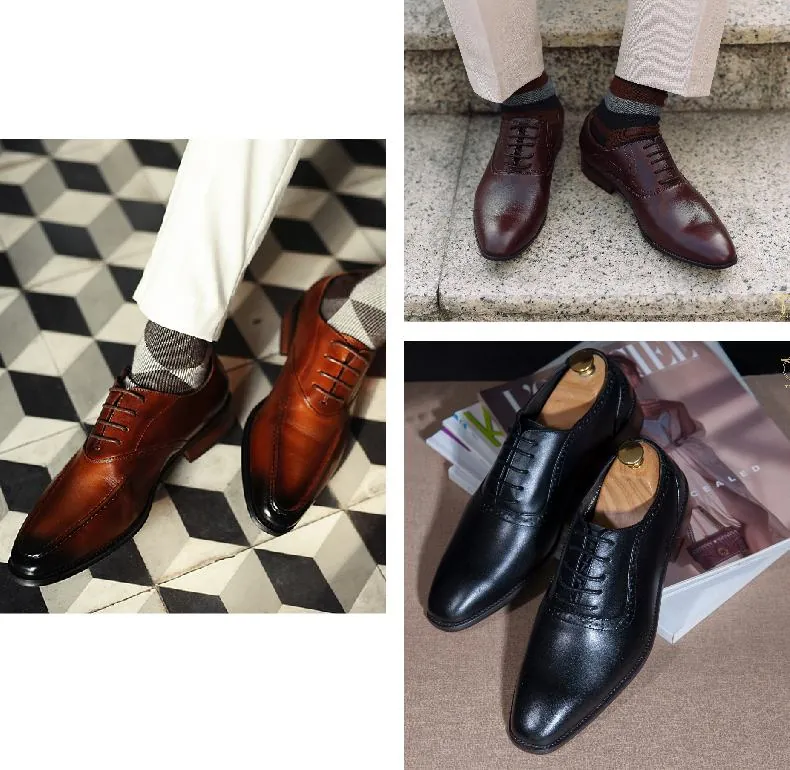
- Oxford (also called balmoral): the two eyelet panels are stitched under the vamp and pull tight against each other when laced — a closed lacing.
- Derby: the eyelet panels sit on top of the vamp and can swing wide open when the laces are loosened — an open lacing.
Every other difference — formality, fit, versatility — follows from this one detail.
Derby vs. Oxford at a glance
| Criterion | Oxford | Derby |
|---|---|---|
| Lacing | Closed, panels meet tightly | Open, panels swing wide |
| Formality | Higher, the office standard | Still dressy, more relaxed |
| High instep / wide feet | Harder to fit | Easy to adjust tightness |
| Versatility | Suits, formal wear | Works with suits, jeans and chinos |
When to choose an Oxford?
- Weddings, important meetings, or dress codes with strict rules: black Oxfords are the formal standard.
- Brown Oxfords still work with a suit, just slightly less formal. A simple rule: match your belt to the shoe tone, and the darker the suit, the darker the brown.
When to choose a Derby?
- High insteps or wide feet: the open lacing lets you adjust the fit and stops the leather from pressing on your instep.
- One pair for many occasions: Derbies pair well with office outfits as well as jeans and chinos.
- More freedom in materials: both smooth leather and suede work for a Derby.

Caring for Derby and Oxford shoes
Both are leather shoes, so the upkeep routine is nearly the same:
- Insert shoe trees right after taking them off to hold the shape, absorb moisture and slow creasing — see our shoe tree guide for types and correct placement.
- Polish regularly to keep the shine and protect against moisture; if you are new to it, read our beginner's guide to shining leather shoes.
- Never wear them two days in a row — the leather needs about 24 hours of rest to recover, and the shoes last longer.
- Check the heel tips monthly. Replace them as soon as the rubber wears through — new heel tips cost 250,000 VND (2026 reference), far cheaper than repairing a heel counter that has already been eaten away.
When to hand them to EXTRIM
Soiled dress shoes, mildew after the rainy season, dried-out leather or unevenly worn soles are best left to people with proper tools. EXTRIM's shoe cleaning service cleans dress and office shoes for 150,000–200,000 VND per pair (2026 reference), conditioning included; repair items like heel tips and sole work are quoted after inspection. Between spa visits, follow our regular dress shoe care routine to maintain them yourself.
👉 Send photos of your dress shoes for advice
Public case studies
Photos in this article illustrate the process — they are not a before–after record with a public case code. EXTRIM does not use illustrative images to promise results for every pair.
Need Professional Attention for Your Item?
EXTRIM provides two-way doorstep courier pickup across Ho Chi Minh City, with up to 80,000 VND off qualifying orders. Service options, final pricing, timing, and any applicable repair warranty are confirmed for each item.