8 Types of Shoe Soles and How to Care for Each One

Before buying a pair, few people flip it over to look at the sole — yet the sole decides how long the shoes last, how much grip you get, and how they should be cared for. This guide walks through eight common sole types, their trade-offs, and the part that matters most: protecting the sole early instead of repairing it after it wears through.
1. Leather soles
Leather is the classic sole for dress shoes and boots: breathable, supple, and it molds to your foot over time. The downsides — it wears fast, hates water, and slips even when brand new.
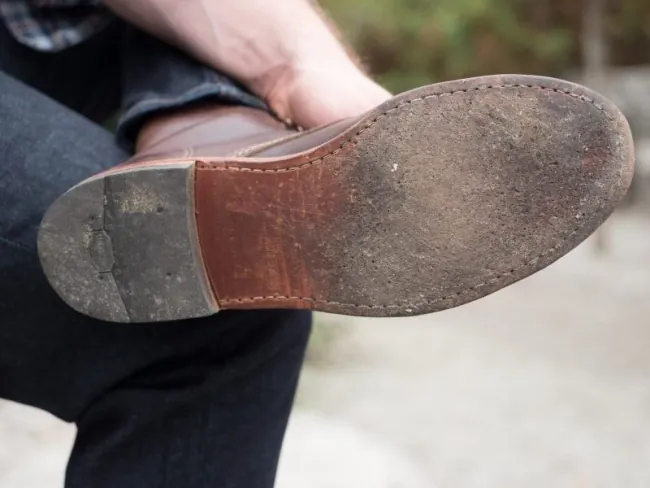
Care: keep them dry, avoid long walks in heavy rain, and ideally add a thin rubber half-sole right away — the rubber takes the abrasion instead of the leather, and it gets replaced without touching the original sole. Replace heel caps as soon as they wear unevenly; waiting means the wear climbs into the leather itself and the repair gets pricier.
2. Cork nitrile soles
Cork nitrile mixes wood pulp with rubber: lighter than plain rubber, nearly as tough, and more resistant to abrasion and oil than leather. A solid everyday choice.
One thing to remember: these soles have few tread grooves, so grip is better than leather but they are not made for downpours or slick surfaces. Care is simple — wipe mud off after wear and check whether the sole wears evenly, since uneven wear quietly changes your gait.
3. Dainite soles (studded rubber)
Rubber soles with recessed round studs, looking neat and modern. The studs give good traction, the flat face collects less mud and gravel, and the style works on both rugged boots and dressier shoes.
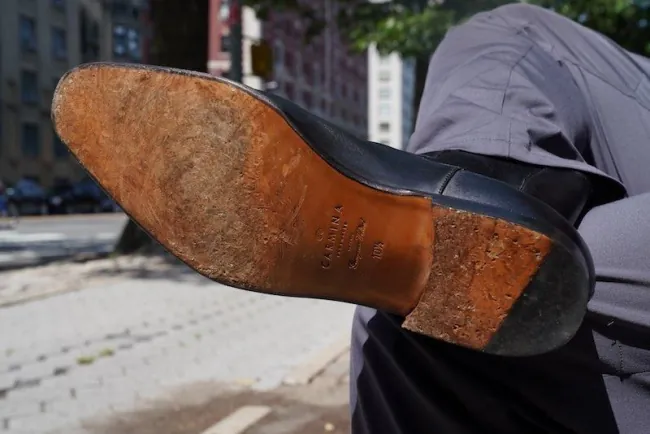
Care: the easiest of the group — a damp wipe cleans them. Just check the studs; once they wear flat, the sole turns slippery and it is time for a protective overlay or a half-sole replacement.
4. Ridgeway soles
Less common and easy to spot: rubber lugs running lengthwise along the sole edge. Good traction and flexibility, usually seen on heritage-style boots. Care like any lugged sole — brush out the grooves after wet ground, because mud left inside degrades the rubber slowly but surely.
5. Vibram mini-lug soles
Vibram is the best-known sole maker, and its small-lug soles grip well while staying low and light — arguably the best balance of looks and function on boots and sneakers.
The good news for owners: a worn Vibram sole is also the easiest to fix. At EXTRIM, Vibram sole protection costs 599,000 VND, turnaround 7–14 days (2026 benchmarks). If the sole is still healthy, adding a protective layer early keeps the original tread from wearing down.
6. Commando soles
Deep-lugged, thick, heavy rubber with traction on almost any surface and weather — the classic outdoor boot sole. Downsides: mud sticks to it, it weighs more, and once the lugs flatten, grip drops faster than you expect.
Care: brush the lugs after every wet outing and let the shoes dry in open air, because thick soles hold moisture. When worn, consider a re-sole; a standard full sole replacement starts at 550,000 VND (2026 benchmark).
7. Flat polyurethane (PU) soles
Flat PU soles look sleek, feel firm and last a long time — common on work boots and platform shoes. But PU has a weakness few people mention: over the years, the material absorbs ambient moisture and hydrolyzes from the inside, turning spongy and crumbling even on pairs rarely worn. Storing them in humid places speeds this up.
Care: wear them regularly rather than leaving them in the box, keep them dry, and check the sole once a year. Once it starts feeling spongy, a full sole replacement is the only real fix — wait too long and the glue line and welt go with it.
8. Crepe soles
Crepe is natural rubber, noticeably softer and springier, common on moccasins and desert boots. In exchange: the porous face soaks up water and oil, collects lint and pebbles within a day, and wears faster than other rubbers.
Care: wipe dry after wear, keep it away from kitchen grease — once oil soaks into crepe, it is nearly impossible to clean at home. Worn or torn crepe should be replaced by a technician; cutting it yourself usually ruins the sole shape.
Once you pick a sole, protect it early
Whatever the sole type, real lifespan comes down to protection before the wear shows:
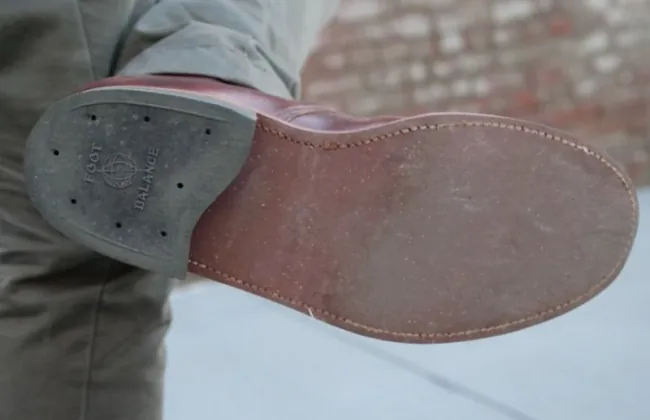
- Full-sole Vibram or Sole 3M overlay: 599,000 VND, Sole Gel 799,000 VND (2026 benchmarks) — the go-to for leather soles, thin soles and sports sneakers.
- Heel cap replacement for dress shoes and heels: 250,000 VND, best done when the heel is about half worn.
- Standard full sole replacement when the sole is badly damaged: from 550,000 VND, glue warranty 2 months.
Compare the two popular options in Sole 3M vs Vibram sole protection, and see what a correct application looks like in Vibram sole protection done right.
When to send your shoes to EXTRIM?
Hand the pair to a technician instead of self-treating when:
- A leather sole has worn down to the leather body, or the heel leans to one side — half-sole or heel-cap work through our sole/Vibram service.
- A PU sole turns spongy or the tread is worn flat — full sole replacement; see uneven sole wear: causes and fixes for why it happens.
- Sports sneakers burn through soles fast — read about resoling sports shoes for grip; final quotes depend on actual condition.
👉 Send photos of your soles to get a protection recommendation
Public case file
Photos in this article illustrate the process — they are not a before–after record with a public case code. EXTRIM does not use illustrative images to promise results for every pair.
Need Professional Attention for Your Item?
EXTRIM provides two-way doorstep courier pickup across Ho Chi Minh City, with up to 80,000 VND off qualifying orders. Service options, final pricing, timing, and any applicable repair warranty are confirmed for each item.