5 Ways to Spot Fake Nike Shoes Before You Buy
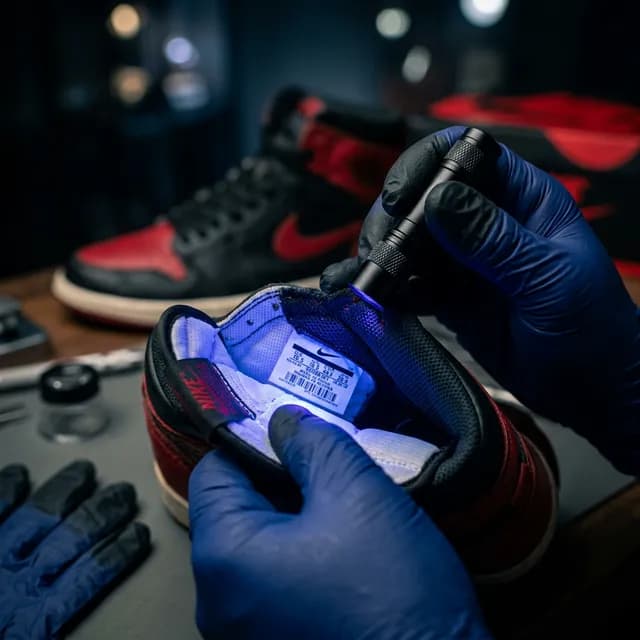
You just spotted a "steal" in a sneaker group at half the StockX price. Heart pounding, you're about to transfer the money for a pair of Nike Air Jordan 1 Travis Scott. Hold on — the line between scoring the deal of the year and getting spectacularly scammed can be a single stitch!
Counterfeits (super fakes / 1:1 reps) keep getting closer to the real thing. The naked eye alone can barely tell. Here are 5 "legit check checkpoints," drawn from the details EXTRIM technicians routinely notice on the shoes they receive, to help you protect your wallet.
1. The Smell Test — the "Chemical" Scent Gives It Away
Just like luxury handbags, your nose can catch what fakes can't imitate.
- Authentic Nike: Nike's signature scent is heat-pressed adhesive combined with polyurethane (PU) leather — fairly mild, not harsh, and it fades after a few days out of the wrapping.
- Fakes: Open the box and a pungent, toxic chemical smell hits you — the stench of unprocessed recycled plastic and cheap industrial glue.
2. The Secret Behind the Size Tag
The tag glued inside the tongue is one of the places fakes give themselves away most often. Authentic pairs use hot steel-die heat pressing. Run your finger across the tag and it melts smoothly into the tongue's fabric mesh — the edges seem to sink and "melt" into the grooves. Fakes, on the other hand, use nylon tags glued on with surface adhesive. They feel slick and flat, the four corners sit dry and loose, and you can pry one up with a fingernail. (Checking the UPC barcode or style code on Google is now pointless — Chinese factories print exact copies of the numbers.)
3. Stitching Precision Tells the Story
Flip to the stitching where the upper meets the midsole. Nike is precise enough to spec how many millimeters each stitch gap should be. Needle penetrations are sharp, the stitch lines are dead straight, and the spacing between holes is perfectly even with thick, dense thread. Super fakes are hand-stitched by factory workers, so occasionally you'll find crooked needle holes, tiny frayed threads, and microscopic blobs of leaking glue right at the creased edges of the leather panels.
4. The Legendary Swoosh
Nike's iconic comma-shaped Swoosh is the soul of the shoe.
- On real pairs, the tail edge of the Swoosh is cut razor-sharp and clean (a "clean edge"). The leather is stretched smooth, with zero wrinkling or bunching.
- On reps and fakes, the Swoosh tip is often slightly dull, wavy, or uneven, the border shows frayed fuzz from poorly trimmed fake leather, and the embroidery over the Swoosh edge is broken and uneven in color.
5. The UV Blacklight Test
A check that serious resellers often use: Shine a UV blacklight on the size tag, the shoe box, and the stitching along the midsole line.
- On fakes: Chinese factories often mark sizing and stitch guides with invisible fluorescent ink. A glowing blue ballpoint line and stitching that lights up like a nightclub will expose the fake instantly under UV!
- On real pairs: Completely silent — no glowing marks along the leather grooves or stitching lines.
Bottom line: Buying legit sneakers is an investment in value. Accidentally bringing home a super fake is a bitter pill. And if your authentic pair has picked up scuffs, wear, and grime from daily walks?
👉 Want to keep your authentic sneakers clean and lasting: Check out our sneaker spa & care packages and pricing
Need Professional Attention for Your Item?
EXTRIM provides two-way doorstep courier pickup across Ho Chi Minh City, with up to 80,000 VND off qualifying orders. Service options, final pricing, timing, and any applicable repair warranty are confirmed for each item.