5 Most Common Leather Types Used for Handbags

Before you clean or condition a leather bag, the first question is not which product to use — it is what the bag is made of. Each leather reacts differently to water, oils and friction. Here are the five leathers you will meet most often.
1. Cowhide — the most common and forgiving
Cowhide is the workhorse of the handbag world: office bags, laptop bags, everyday totes. The hide is thick, elastic and finished in many ways — pebbled grain, waxed, or smooth — which is why cowhide bags vary so much in look. It takes daily wear better than most leathers and cleans up easily.
One caveat: waxed cowhide hates aggressive cleaners — scrub hard and you leave shiny streaks on the surface.

2. Crocodile — the most expensive
Croc scales are sharp and unique: every bag has its own pattern because each hide is different. The leather is thin, soft and highly elastic, but hard to work and almost always hand-made — which is why croc bags cost several times more than other exotics, and why their cleaning and restoration is specialist work. Do not experiment with household products on scaled leather; send it to a spa.
3. Lambskin — the softest and lightest
Lambskin is the buttery leather used on many high-end bags — see the care routine in luxury bag care to preserve resale value. The flip side: it is the most fragile leather in this list. It scratches easily, stretches out of shape under heavy loads, and needs a soft cloth and a light touch — never scrubbing, never sharp objects in the same compartment.
4. Goatskin — soft with high elasticity
Goatskin has a matte, slightly pebbled surface without the gloss of cowhide or lambskin, and it flexes easily with whatever you carry. Its weak points are lower tear resistance and poor water tolerance — keep goatskin bags away from rain and prolonged humidity.
5. Buffalo — the thickest and stiffest
Buffalo hide is dense, stiff and holds its shape, which is why structured men's briefcases and laptop bags use it. It tolerates water better than the other leathers here, but "better" still means splash-resistant — no leather should be soaked. The trade-off is weight: a full buffalo bag is noticeably heavier.
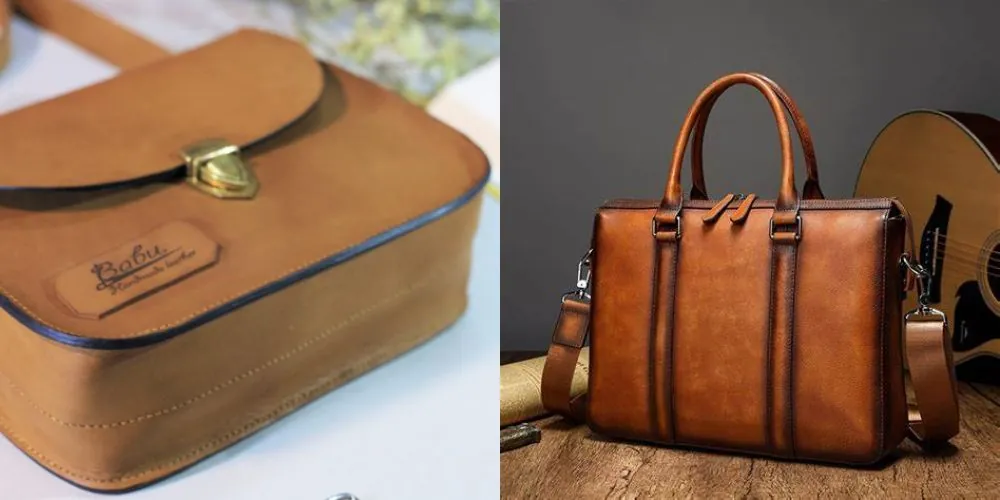
Matching the leather to your use
- Daily commute, rough handling: cowhide or buffalo.
- Events, light carry, luxury feel: lambskin or goatskin — accept the higher maintenance.
- Long-term value with predictable care costs: cowhide is the safest bet.
When to send the bag to EXTRIM
Stop DIY when stains will not wipe off, the leather feels dry and stiff, color has smeared after a home cleaning, or a strap or zipper fails. The bag spa service cleans and conditions each leather by type — cleaning from 300,000 to 600,000 VND by size, full spa from 500,000 to 800,000 VND, color restoration quoted after inspection (2026 reference). For storage when the bag rests, see how to store leather bags properly.
👉 Send photos of your bag to get the leather identified and a treatment plan
Public cases
Photos in this article illustrate the process — they are not a before–after record with a public case code. EXTRIM does not use illustrative images to promise results for every pair.
Need Professional Attention for Your Item?
EXTRIM provides two-way doorstep courier pickup across Ho Chi Minh City, with up to 80,000 VND off qualifying orders. Service options, final pricing, timing, and any applicable repair warranty are confirmed for each item.